15 July 2026
Best Biometric Devices For Aadhaar Authentication
A practical buyer's guide to choosing UIDAI L1-certified fingerprint devices for Aadhaar authentication, e-KYC, and enrollment in India.
15 July 2026
A practical buyer's guide to choosing UIDAI L1-certified fingerprint devices for Aadhaar authentication, e-KYC, and enrollment in India.


If you're searching for the right biometric device for Aadhaar authentication, you've probably already discovered the problem of too many choices.
There are dozens of options, most product pages read the same way, and very few sources actually explain what separates a good device from a compliance risk waiting to happen.
This guide cuts through that. Here's what actually matters when choosing a biometric device for Aadhaar authentication in India, and which devices are worth considering depending on your use case.
Before comparing devices, it's worth being clear about the baseline requirement: any device used for Aadhaar-based biometric authentication in India must be UIDAI L1-certified. This is a regulatory requirement under UIDAI's Registered Device framework.
L1 certification means the device captures the biometric and encrypts it on-board, inside a secure element, before any data leaves the sensor. This is different from L0 certification, where encryption happens outside the device. This is a distinction that matters significantly for compliance and security, and one worth understanding in detail if you're new to this space.
Beyond certification, there are four things which separate a genuinely good Aadhaar authentication device from one that looks fine on a spec sheet but underperforms in the field. A good real-world ready device can capture accuracy across diverse fingerprint conditions, has strong build durability for daily operational use, has RD Service reliability, and has good after-sales support coverage.
If you're setting up an enrollment centre, a bank branch counter, or a government service point where the device stays in one location and handles high transaction volumes daily, you need a device built for durability and consistent accuracy under repeated use.
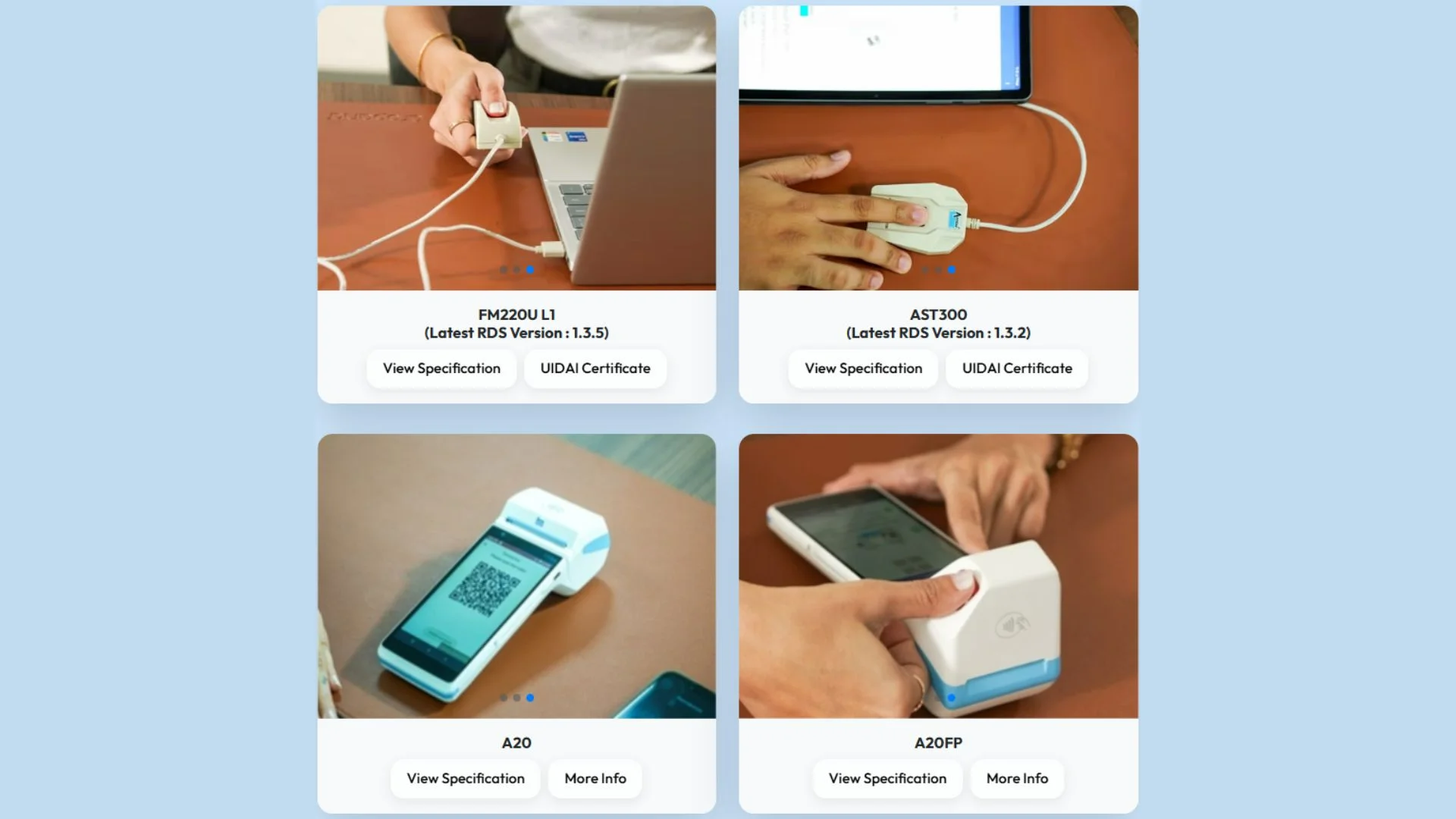
The FM220U L1 is built for exactly this. It's UIDAI L1-certified with secure boot and trust zone encryption, and it's designed to handle the kind of daily high-frequency authentication that fixed service points require without degrading in accuracy over months of continuous use.
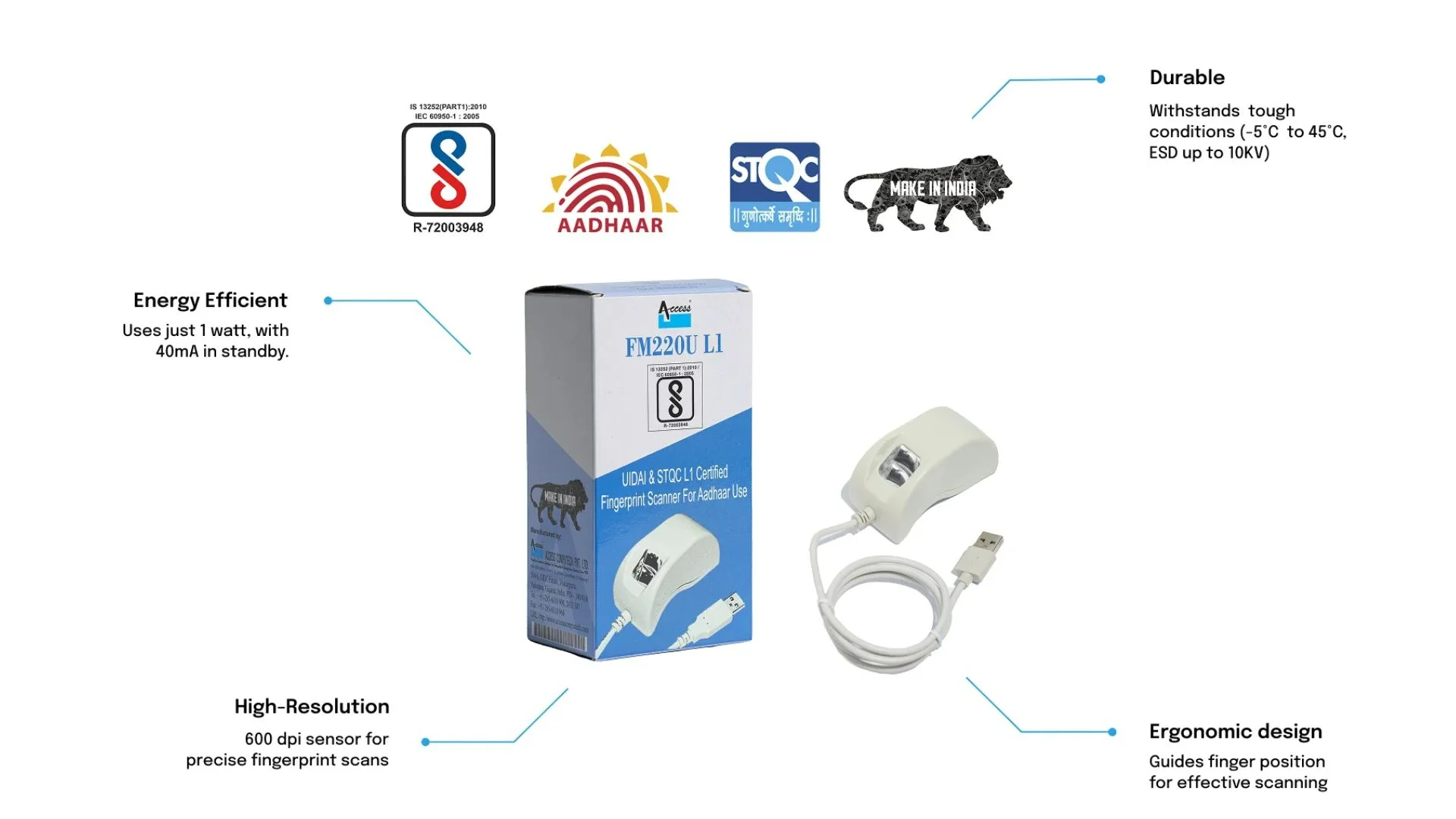
One great use-case and example of the FM220U L1 is Access Computech's massive biometric achievement with over 20 lakh verifications in one day at NEET 2026 re-exam.
A significant share of India's working population has fingerprints that are worn, calloused, or affected by manual labour and standard optical sensors often struggle with these in practice, regardless of what their accuracy specs claim under lab conditions.
The AST300 addresses this directly with thermal detection technology, which improves capture accuracy specifically
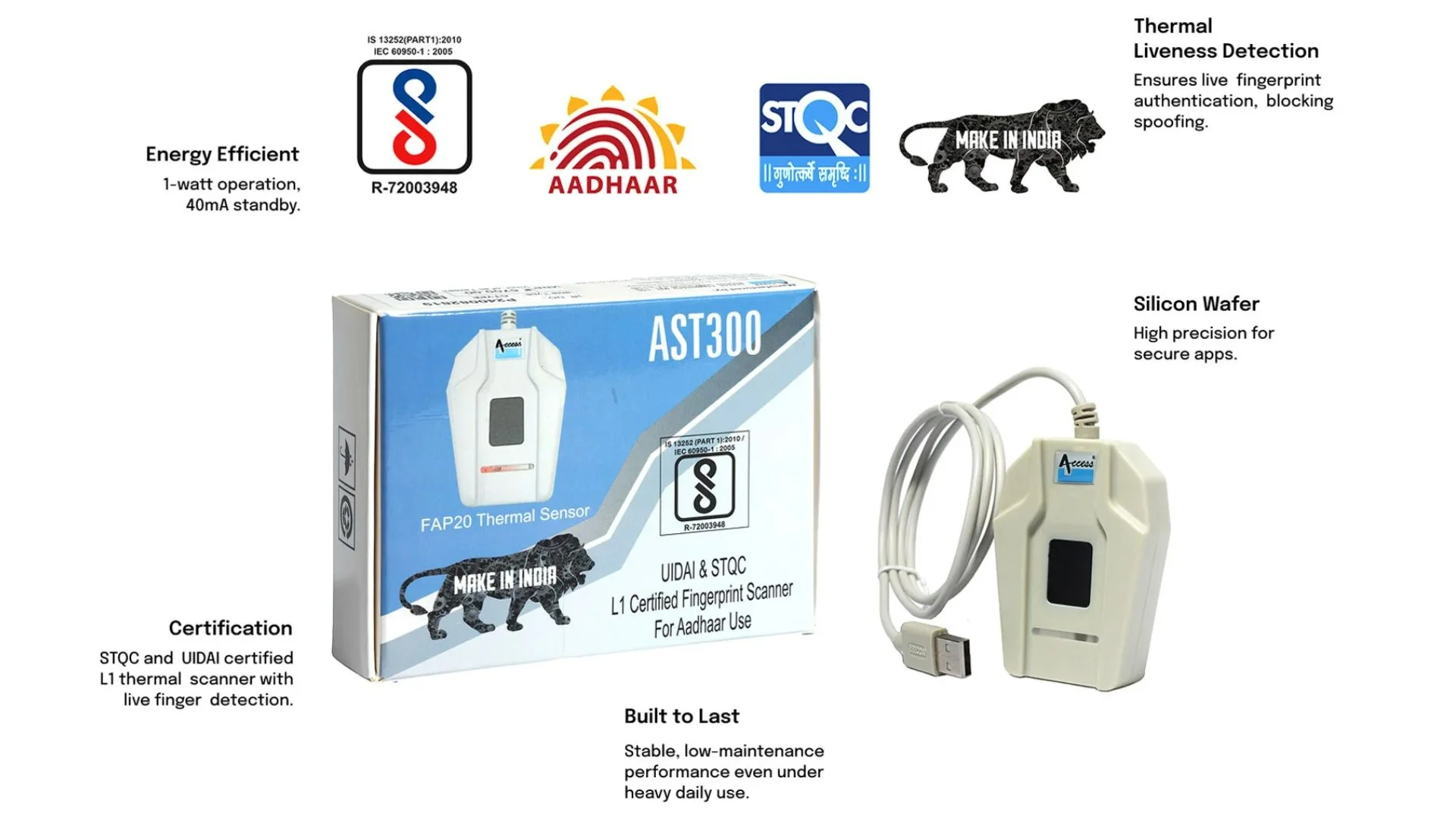
in cases where conventional sensors produce high rejection rates. For deployments in manufacturing, agriculture, construction, or any context with a labour-heavy user base, this is a meaningfully different category of device.
Field agents, BC operators, and door-to-door enrollment teams need something different from a fixed-counter device. They need something which is lightweight, battery-efficient, and able to pair with a smartphone or tablet rather than requiring a laptop or fixed terminal.
If your use case involves both Aadhaar authentication and payment processing, like Micro ATM operations, BC banking, or pigmy collections, then a combined device removes the need to carry and manage two separate pieces of hardware.
The A20 FP is built for this context, giving field teams the freedom to authenticate anywhere without being tethered to a power source, all while maintaining full L1 certification and capture quality.
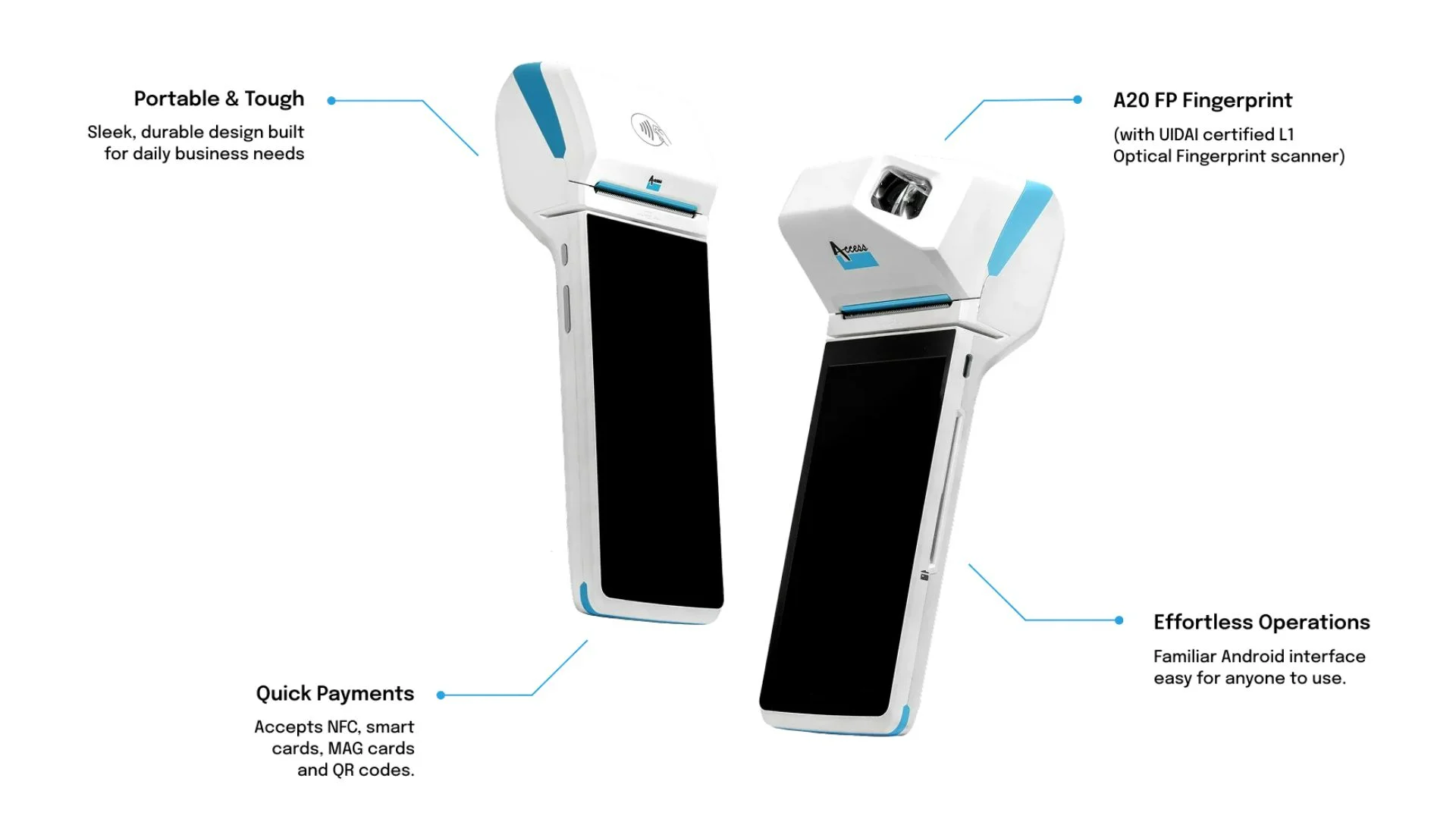
It also integrates UIDAI L1-certified biometric authentication with payment processing in a single device, built specifically for field banking environments where an operator needs to authenticate a customer and complete a transaction in one continuous workflow.
A few practical checks that matter more than most spec sheets will tell you:
Verify the certification level directly: Don't take "UIDAI certified" at face value, ask specifically whether the device is L0 or L1 certified, and request the certification documentation. This single check eliminates most of the risk in a biometric hardware purchase.
Test with your actual user population: Lab accuracy figures rarely reflect real-world performance. If possible, test shortlisted devices with a representative sample of the fingerprints your deployment will actually encounter before committing to a large order.
Confirm RD Service is active and maintained: A device can be L1-certified and still fail in production if the Registered Device service behind it isn't kept current with UIDAI's evolving requirements. Ask how updates are managed and how quickly they're rolled out. Access Computech's RD Services enable businesses to perform Aadhaar authentication and e-KYC reliably, securely, and in compliance with UIDAI standards..
Check the support and service network: A biometric device in daily field use will eventually need servicing or replacement. A vendor with limited service coverage in your operating geography turns a routine hardware issue into extended downtime.
For high-footfall, fixed-location authentication: such as in bank branches, enrollment centres, government service points, durability and sustained capture accuracy matter most.
For labour-heavy or rural populations: like manufacturing, agriculture, welfare disbursement, thermal capture technology that handles worn or calloused fingerprints makes a measurable difference in authentication success rates.
For mobile, field-based deployments: BC agents, door-to-door KYC, enrollment drives, Bluetooth connectivity and lightweight form factors matter more than raw processing power.
For combined banking and identity workflows: Micro ATM, pigmy collection, assisted banking, an integrated biometric-payment device reduces operational complexity for the field agent.
Choosing the right biometric device for Aadhaar authentication isn't about finding the device with the best spec sheet. It's about matching certified, field-tested hardware to the specific conditions your deployment will actually face.
If you'd like help identifying the right device for your specific use case, explore Access Computech's full biometric portfolio or get in touch with our team directly.