On 21 June 2026, the National Testing Agency (NTA) of India conducted the NEET-UG re-examination, one of India’s most competitive, and, this year, most scrutinised exams. Over 20 lakh registered students walked into over 5,440 examination centres across the country and 14 centres abroad on the same day for the same time-slot.
But, before any of these students could enter an exam hall, every single one of them had to pass through a mandatory biometric verification checkpoint (fingerprint authentication / facial recognition) as per the NTA circular - Advisory for Biometric Verification and Exception Protocol for NEET (UG)-2026 ReExamination.
That verification had to happen across thousands of centres simultaneously, in a window of roughly 30 to 60 minutes, with no margin for error, slowdowns, or device failures. And this entire process was conducted under immense time pressure, across thousands of centres, simultaneously. The NTA had described the re-exam as a zero-tolerance operation, especially due to the massive controversy surrounding the cancellation of the original exam earlier in the year.
This was one of the most demanding single-day biometric deployment operations in the country, and there are also reports of bad-actors being caught on the very same day trying to spoof their way through. However, thanks to the proactive administration and police investigation, such rackets were brought to an abrupt end.
Among the certified biometric hardware used for candidate verification at NEET examination centres, Access Computech's FM220U L1 devices were deployed at a significant scale. With approximately 55,000 to 60,000 units deployed for examination use cases across India over the past year alone, across NEET and other national and state-level competitive examinations such as the JEE, the scale of what this kind of deployment actually requires is worth understanding clearly.
A massive win for Access Computech and the entire biometric ecosystem
20 lakh simultaneous verifications is an abstraction until you imagine it with your eyes closed. That is more people than the entire population of many Indian cities, all walking through a biometric gate in the same narrow window, at centres spread from Kashmir to Kanyakumari and from Gujarat to Arunachal Pradesh.
Each student’s identity was authenticated and each one was verified. Each record was created cleanly, securely, and in real time.
For any hardware device, this is the ultimate stress test. A live, high-stakes, nationally watched deployment where failure was simply not an option.
Access Computech has been building and deploying biometric hardware in India since 1994. That is over three decades of iteration, field learning, and certification have gone into devices that now run in ration shops, bank branches, government offices, and examination centres across the country.
We have installed over 3.5 million of our devices worldwide with billions of authentications processed over the years.
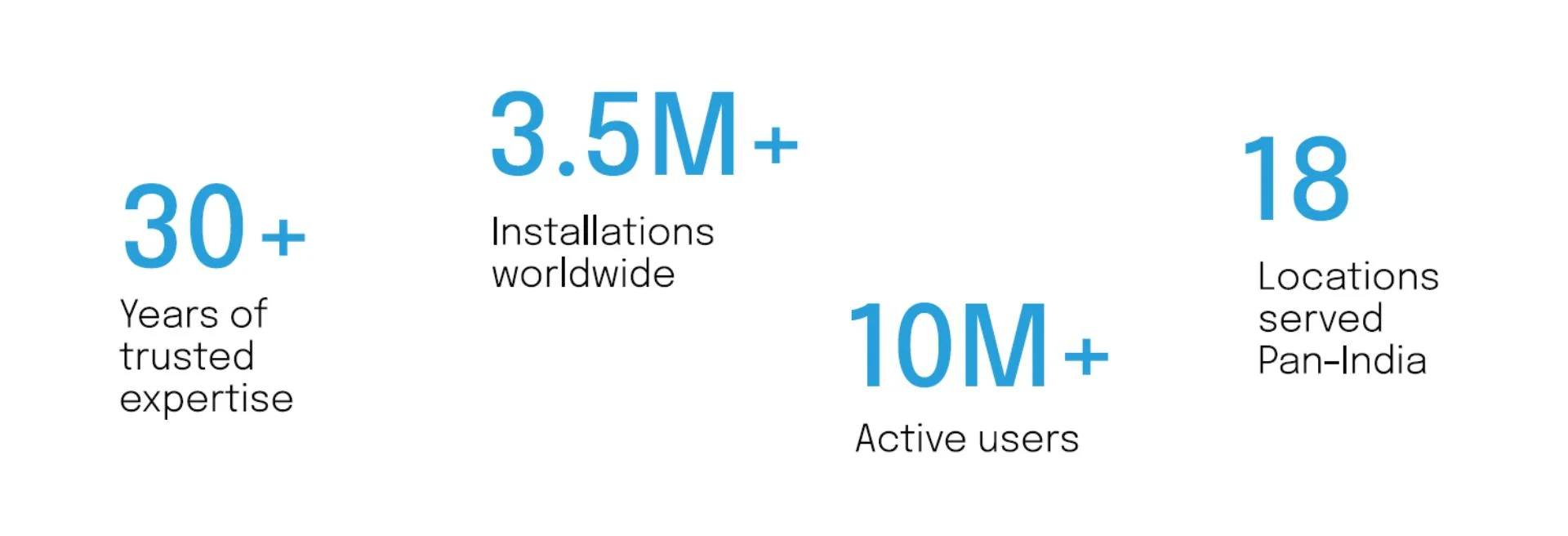
And on 21 June 2026, over 20 lakh more. Completed without a hitch, under some of the most demanding conditions any biometric device has ever been asked to perform in. That is what three decades of getting it right in this field looks like.
Why exam biometric verification is a different problem
Biometric verification in an Indian competitive-examination context has a set of constraints that most other deployment environments don't face simultaneously. The FM220U L1, however, was built for exactly this kind of pressure. And on June 21, it delivered under all of it simultaneously, at national scale.
Every verification has to happen within a narrow time window:
A candidate who cannot be verified quickly creates a queue behind them, and at centres processing hundreds of students in a short period before exam commencement, throughput directly affects exam integrity and candidate experience.
The user population is not a controlled demographic:
Students presenting for NEET or JEE or any exam held at a similar scale, come from every part of India, across all age groups, with fingerprint quality that varies significantly. A device that performs well with clean, well-defined prints but struggles with dry or faintly defined fingerprints is not suitable for a national examination deployment.
There is also no margin for device failure:
An authentication device that goes offline at a corporate service point creates an inconvenience. One that fails at an examination centre during the verification window creates a serious operational and compliance problem. Reliability under sustained, high-frequency use is not optional.
The verification is consequential:
NTA's biometric verification framework, which includes Aadhaar-linked authentication, fingerprint verification, and live photography, is specifically designed to prevent impersonation, ensure the right candidate is sitting the right exam, and create an auditable identity record for every authenticated entry. A failed or bypassed verification would raise questions on the integrity of the NTA and was simply not acceptable.
What L1 certification means in this context
The FM220U L1's UIDAI L1 certification is directly relevant to the examination use case. L1 certification means the fingerprint is encrypted on-board, within the device's secure element, before any data is transmitted. The raw biometric is never exposed outside the device at any point in the process.
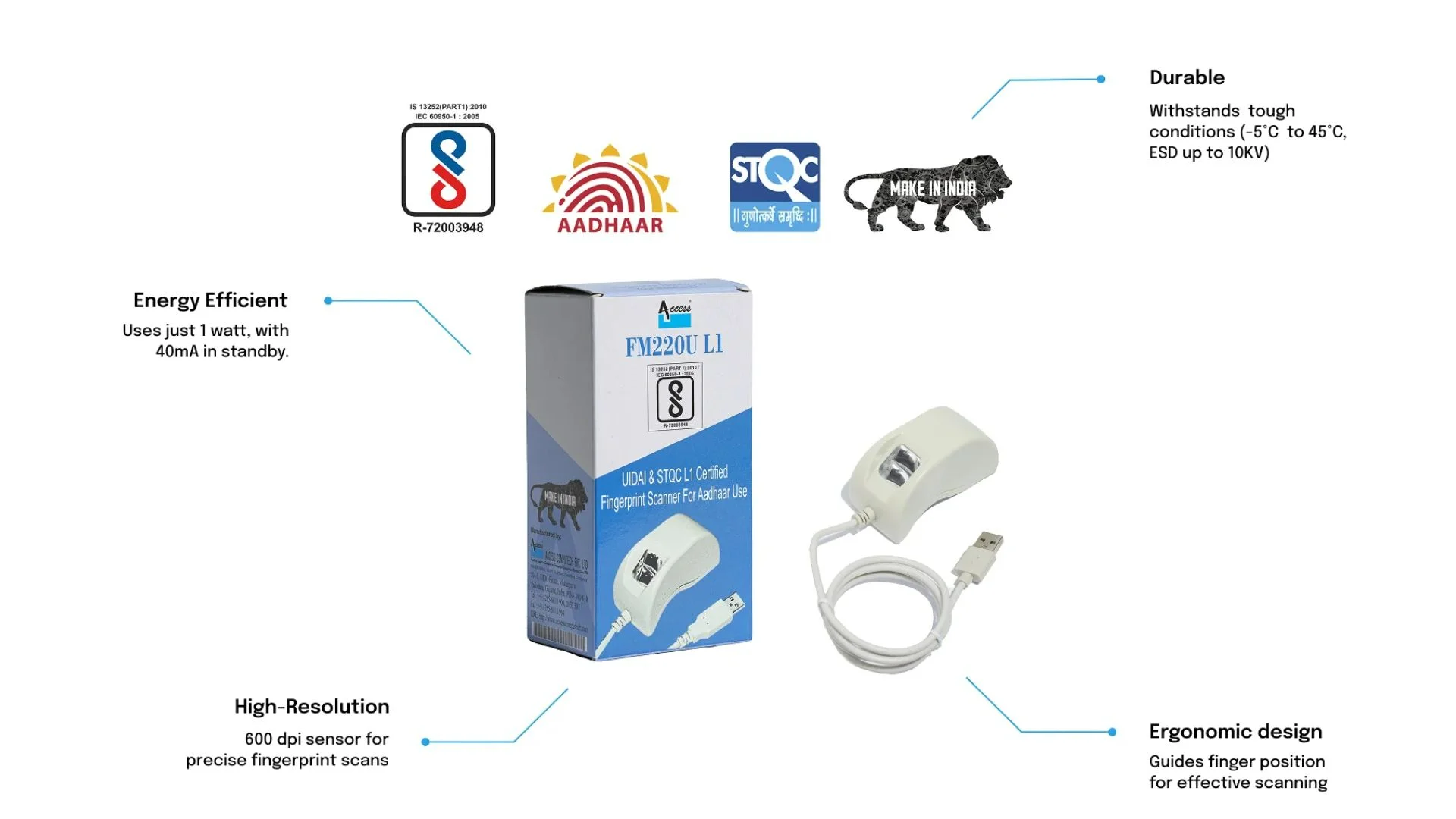
In a high-stakes environment like a national examination, where the identity of over two million candidates is being verified in a single day, the integrity of the capture layer is foundational. A device that handles encryption externally creates a point of exposure that is both a security risk and a compliance gap. L1 certification removes that vulnerability at the hardware level.
The same certification that makes the FM220U L1 suitable for Aadhaar authentication in banking and welfare distribution makes it the appropriate device for high-stakes identity verification in examination settings. The certification requirement and the operational demand converge at the same point.
The broader examination deployment picture
NEET is the most recent and most visible single deployment, but the examination biometric verification use case extends significantly beyond it.
JEE, India's premier engineering entrance examination, involves a similarly large candidate base and similar verification requirements at examination centres. State-level competitive examinations, government recruitment tests conducted by bodies like SSC and IBPS, and university entrance examinations across India all operate biometric verification frameworks of varying sophistication.
The common requirement across all of these is certified, reliable hardware that can handle diverse fingerprint conditions, sustain performance over a high-volume single-day operation, and produce a clean, auditable authentication record for every candidate processed.
The approximately 55,000 to 60,000 units deployed by Access Computech for examination use cases over the past year reflect how consistently this requirement recurs across India's examination calendar. And not as a one-time event, but as a regular, structured deployment cycle tied to national and state examination schedules.
What this deployment reflects about our hardware
There is a straightforward way to interpret a deployment at this scale: when the National Testing Agency and examination bodies across India need certified biometric hardware for candidate verification, the FM220U L1 by Access Computech is among the devices that meet the requirement.
And it has proven itself in the field, across multiple examination cycles, across thousands of centres, with a candidate population that represents the full diversity of fingerprint conditions across the country.
For institutions and programme managers evaluating biometric hardware for high-stakes, high-volume verification use cases, the examination deployment record is a more reliable reference point than any controlled lab benchmark.
If you'd like to explore how Access Computech's biometric portfolio including the FM220U L1, maps to your verification requirements, we're glad to walk you through it.