18 November 2026
Supporting Secure Customer Onboarding In India With Biometric eKYC
How registered biometric devices support Aadhaar-based identity verification across banking, financial services, telecom and other regulated services.
18 November 2026
How registered biometric devices support Aadhaar-based identity verification across banking, financial services, telecom and other regulated services.


Customer onboarding often requires organisations to establish that an individual is who they claim to be. This is particularly important in sectors such as banking, financial services and telecommunications, where identity verification forms part of customer due diligence and regulatory requirements.
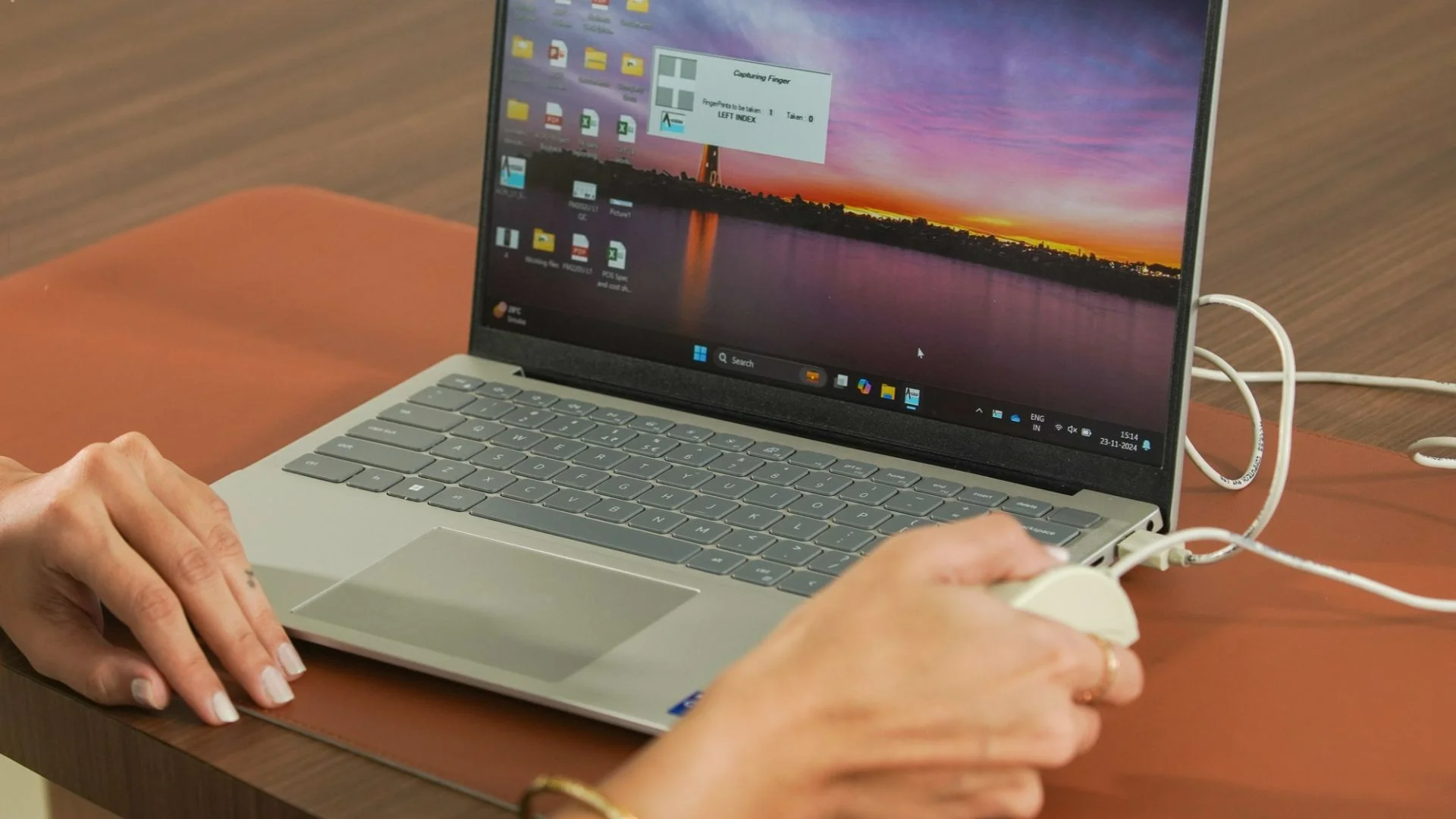
Electronic Know Your Customer (eKYC) processes help organisations verify customer identities through digital methods, reducing reliance on physical paperwork and manual checks. In India, Aadhaar-based authentication is one of the methods used for this purpose. Biometric devices can support these processes by securely capturing fingerprints for authentication.
However, a biometric scanner is only one part of the eKYC infrastructure. The organisation conducting the verification, its authorisation to use Aadhaar authentication, the application and the connected authentication systems all play a role.
eKYC refers to the electronic verification of a customer's identity. Instead of relying entirely on physical documents and in-person checks, organisations can use digital systems to collect, validate and verify identity information.
In India, Aadhaar-based eKYC allows an individual's identity to be verified through the authentication infrastructure provided by the Unique Identification Authority of India (UIDAI). Depending on the permitted process, authentication can use biometric information or a one-time password (OTP).
eKYC and digital identity verification are relevant across several sectors:
The specific verification method depends on the applicable regulations, the service being provided and the organisation's authority to use the relevant authentication facility.
Aadhaar-based biometric authentication compares the fingerprint or other permitted biometric information submitted during an authentication request with the information held in UIDAI's Central Identities Data Repository.
In a typical fingerprint-based workflow:
This allows an organisation to incorporate biometric verification into its digital onboarding process without relying solely on visual document checks.
It is important to distinguish between Aadhaar authentication and the complete customer KYC process. An authentication response verifies the submitted identity information against UIDAI's records. The organisation must still complete the other checks and procedures required for its particular service.
Biometric information requires careful handling. The device used to capture a fingerprint is therefore an important part of the authentication process.
UIDAI requires biometric information for Aadhaar authentication to be captured using certified biometric devices that meet its specifications. These must operate as Registered Devices within the Aadhaar authentication ecosystem.
Registered Devices use a unique device identity and security mechanisms to help ensure that biometric information is captured live and protected against tampering or replay. The biometric data is encrypted at the point of capture in accordance with UIDAI specifications.
But device compliance alone does not establish a secure or authorised eKYC operation. The wider setup must also account for:
These requirements make eKYC a system-level implementation rather than a function that can be delivered by a fingerprint scanner alone.
The choice of device depends on how customer onboarding is carried out. A fixed counter, a field-based verification point and a mobile POS workflow may have different hardware requirements.
Access Computech offers three devices that can support different biometric capture and onboarding configurations.
FM220U L1 is a discrete fingerprint scanner designed to connect to a host device such as a computer or compatible Android device. It can be integrated into an organisation's existing application and authentication workflow.
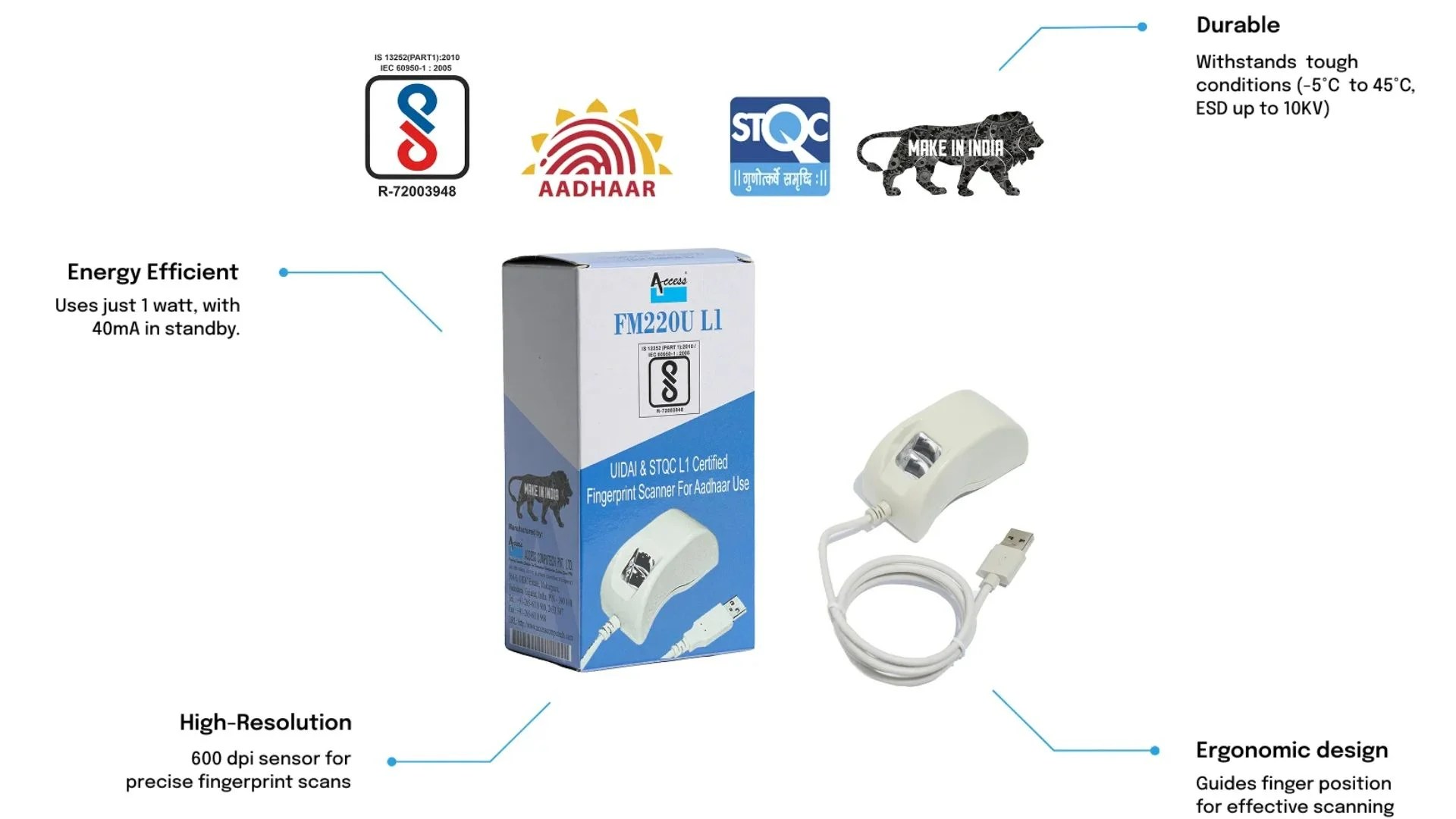
Its USB, Micro USB and Type-C connectivity options make it suitable for deployments where fingerprint capture is handled separately from the main customer-facing system.
Suitable for: Banking and financial service counters, assisted eKYC desks and other host-based customer verification applications.
AST300 is a discrete L1 fingerprint scanner featuring thermal liveness detection. It supports USB connectivity and can be used with compatible Windows, Android and Linux systems.
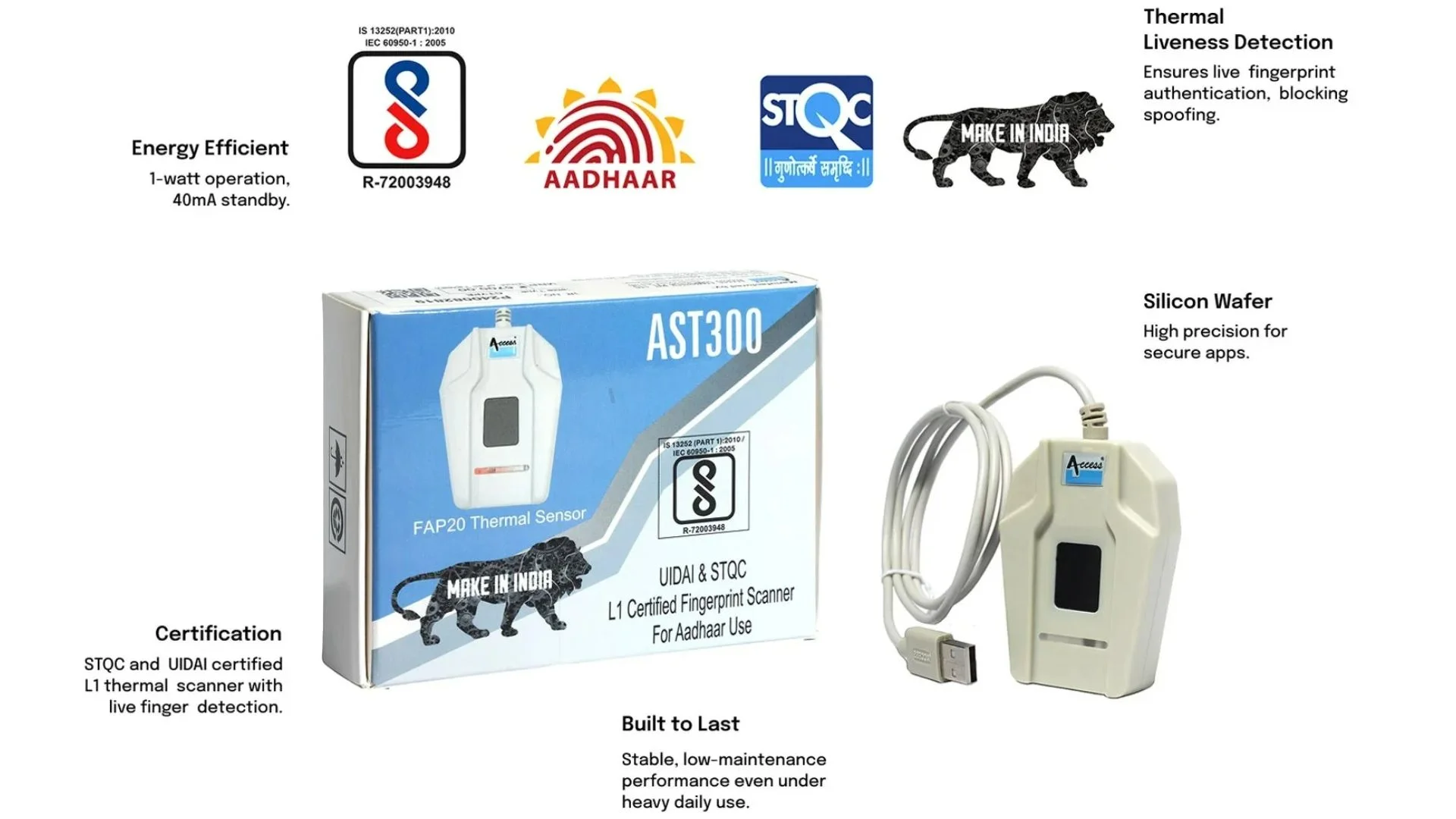
Its compact design makes it suitable for deployments that require a standalone fingerprint capture device connected to an existing application or host system.
Suitable for: Assisted onboarding counters, service centres and other applications requiring standalone fingerprint capture.
Where customer verification forms part of a transaction or field-based service workflow, an integrated device can reduce the need to manage separate hardware.
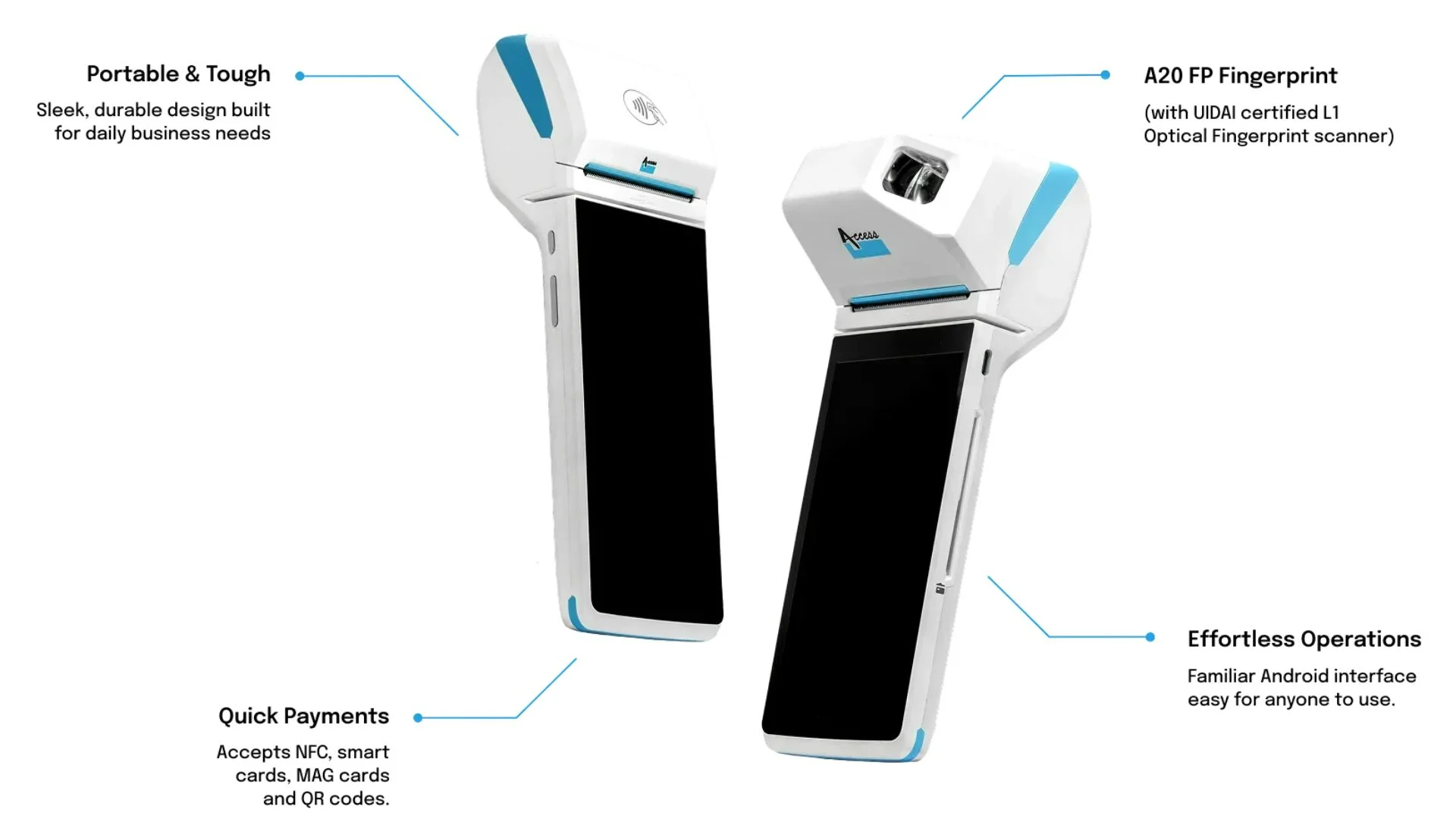
A20FP combines an Android POS terminal with an integrated L1 optical fingerprint scanner. Its touchscreen, connectivity options and built-in thermal printer allow it to support applications that bring customer interaction, biometric capture and transaction processing together.
Suitable for: Assisted onboarding and verification workflows where biometric authentication is integrated into a POS-based application.
The final device selection should depend on the software, authentication infrastructure and deployment requirements. The biometric device must be compatible with the requesting organisation's approved application and the relevant UIDAI specifications.
Biometric eKYC can make customer verification more convenient and help organisations incorporate identity checks into digital onboarding workflows. However, successful implementation depends on more than the quality of the fingerprint scanner.
Authorised access to Aadhaar services, Registered Device compliance, secure data capture, application integration and operational controls must work together. Hardware selection should therefore be considered as part of the wider eKYC architecture.
Access Computech provides L1 registered biometric devices and POS hardware designed to support different identity verification and customer onboarding environments.
Explore Access Computech's biometric devices and solutions for Aadhaar authentication and eKYC deployments.