05 August 2026
How Biometrics Stop Impersonation in Exams
Understanding biometric verification in examinations and how it helps prevent impersonation and cheating at scale.
05 August 2026
Understanding biometric verification in examinations and how it helps prevent impersonation and cheating at scale.


Maintaining the integrity of competitive examinations begins with one fundamental requirement: ensuring that every candidate entering the examination hall is the person who originally registered for the test.
For years, examination authorities relied on admit cards, photographs, and identity documents to verify candidates. While these methods remain important, they can be vulnerable to forged documents, proxy candidates, and human error. As examinations have grown larger and more competitive, organisations such as the National Testing Agency (NTA) have strengthened their verification processes by incorporating biometric authentication into major examinations like NEET and JEE.
During the NEET 2026 re-examination, biometric verification was used to authenticate more than 20 lakh candidates across thousands of examination centres in a single day, demonstrating how the technology can support secure, large-scale candidate verification.
Today, biometric verification has become one of the most effective tools for preventing impersonation at examination centres. Understanding how the technology works, and where it fits within a broader examination security framework, can help universities, examination boards, and testing agencies make informed decisions when planning or upgrading their verification systems.
Competitive examinations often involve thousands or even millions of candidates across multiple locations. In such environments, verifying every individual's identity accurately and efficiently is critical.
Traditional identity verification methods typically involve checking:
Although these checks remain necessary, they rely heavily on visual inspection by verification staff. Forged documents, altered photographs, or deliberate collusion can reduce the effectiveness of document-based verification alone.
Biometric authentication addresses this challenge by verifying a candidate's physical identity rather than simply confirming the authenticity of a document.
Biometric verification confirms that the individual presenting themselves at the examination centre matches the biometric information captured during registration.
A typical verification process involves the following steps:
1. The candidate reports to the verification desk.
2. Their registration details are retrieved.
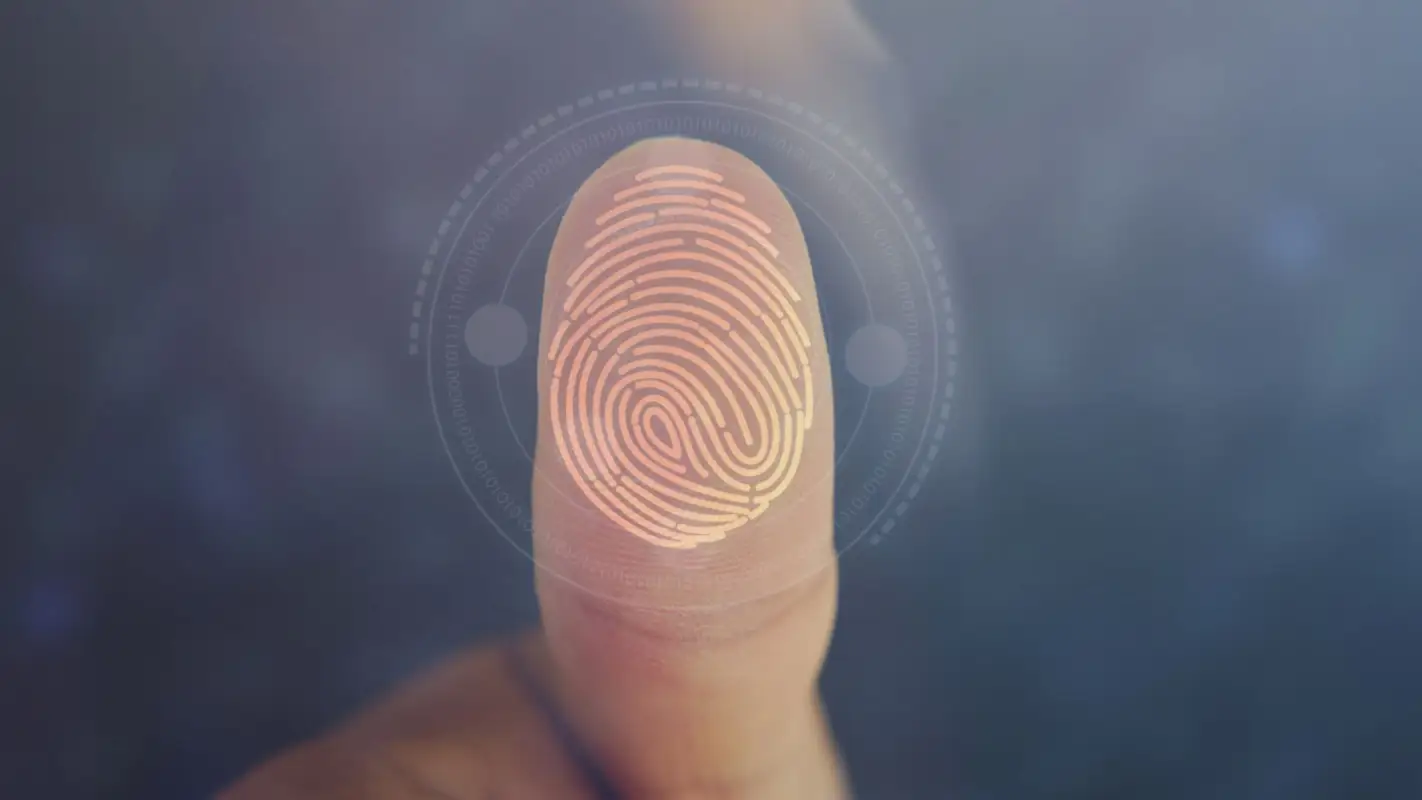
3. The candidate places a finger on a certified biometric scanner.
4. The device captures and securely encrypts the fingerprint.
4. The device captures and securely encrypts the fingerprint.
5. The captured fingerprint is matched with the enrolled biometric record.
6. If the match is successful, the candidate is permitted to proceed.
7. If the verification fails, the case is referred for additional manual verification according to the examination authority's procedures.
Because fingerprints are unique to each individual, this process provides a far stronger identity check than visual document verification alone.
Several biometric technologies are available today, including facial recognition, iris scanning, and fingerprint authentication. For examination centres, fingerprint verification continues to be one of the most practical and reliable options.
Its advantages include:
These characteristics make fingerprint verification particularly well suited to large-scale examination environments where speed and accuracy are equally important.
Although biometric verification provides a strong identity check, it should not be viewed as the only safeguard against examination fraud.
A comprehensive examination security framework typically combines multiple verification methods, including:
Each layer addresses a different aspect of examination security. Biometrics confirms identity, while operational controls help ensure that verification procedures are followed consistently throughout the examination process.
This layered approach has become increasingly important as examination authorities continue strengthening security for large-scale competitive examinations across India.
Not every fingerprint scanner is designed for examination environments. Institutions should evaluate devices based on performance, security, and reliability rather than specifications alone.
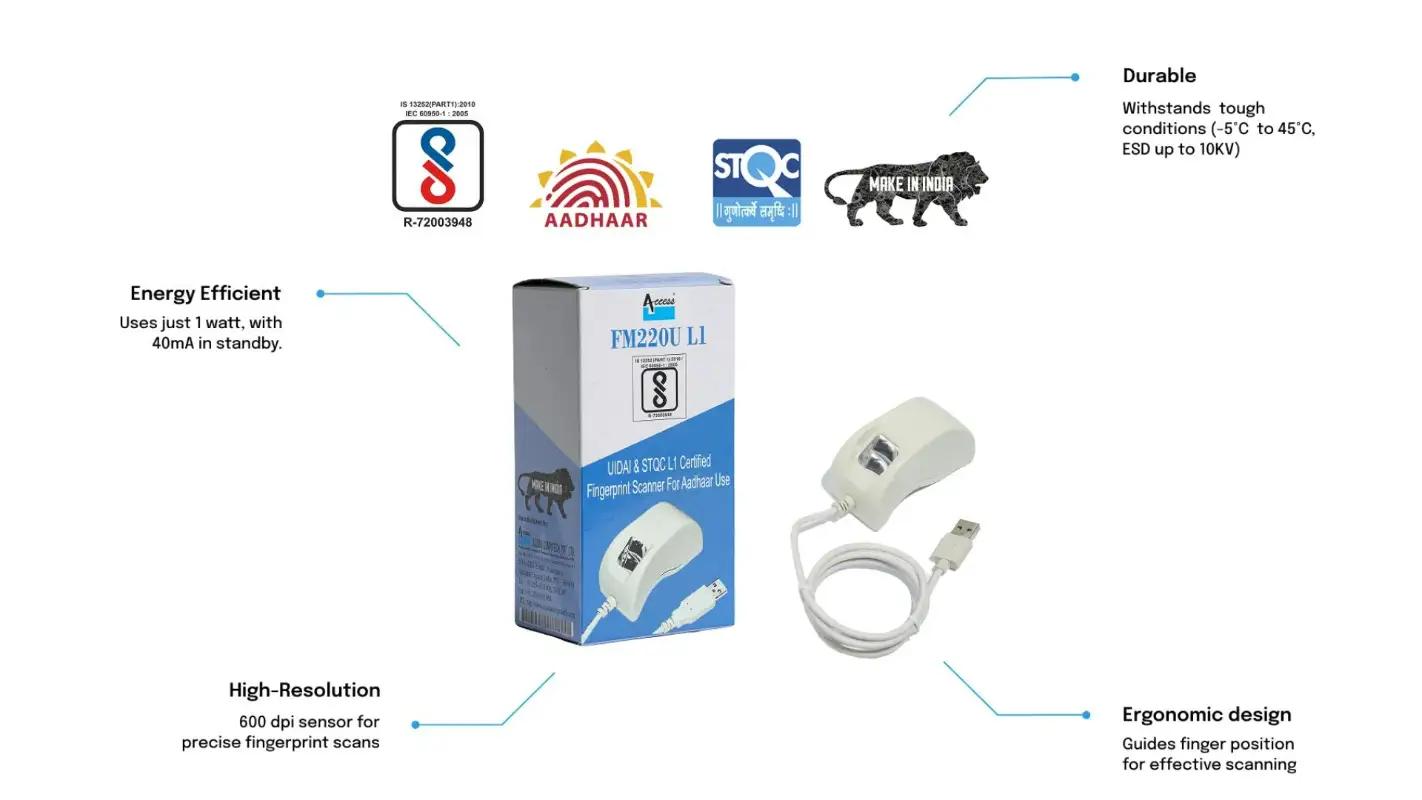
Important considerations include:
Certified devices provide secure biometric encryption and comply with recognised authentication standards, making them suitable for high-security verification environments.
Large examination centres often need to process hundreds of candidates within a limited time. Devices should deliver quick and consistent authentication without creating bottlenecks.
Candidates come from diverse backgrounds, and fingerprint quality can vary. Devices should be capable of accurately capturing worn or faint fingerprints to minimise unnecessary verification failures.
Examination-day verification is characterised by sustained, high-volume usage. Hardware should maintain consistent performance throughout the verification process.
Technical support and replacement services are equally important. Any device failure during candidate verification can disrupt examination operations and should be addressed quickly.
Biometric verification has significantly improved identity verification at examination centres by making impersonation far more difficult than traditional document-based checks alone.
When combined with well-defined verification procedures, trained personnel, and appropriate operational controls, biometric authentication helps examination authorities improve security while maintaining an efficient candidate experience.
Access Computech's FM220U L1 fingerprint scanner is designed for high-volume biometric verification environments, offering UIDAI L1-certified authentication, secure biometric encryption, and reliable performance for examination centres, educational institutions, and other identity verification applications.