26 November 2025
What The FM220U L1 B Tells Us About Evolving Hardware Needs
What happens when a device is allowed to evolve to meet specific use-case requirements, instead of expecting field teams to adapt to the hardware.
26 November 2025
What happens when a device is allowed to evolve to meet specific use-case requirements, instead of expecting field teams to adapt to the hardware.


In every identity or authentication project, hardware tends to be the part that feels fixed. Organisations may customise software workflows, reporting structures, dashboards, or user journeys, but the biometric device usually arrives as a sealed, unchangeable component. One model for everyone, regardless of how different their environments or operational challenges may be.
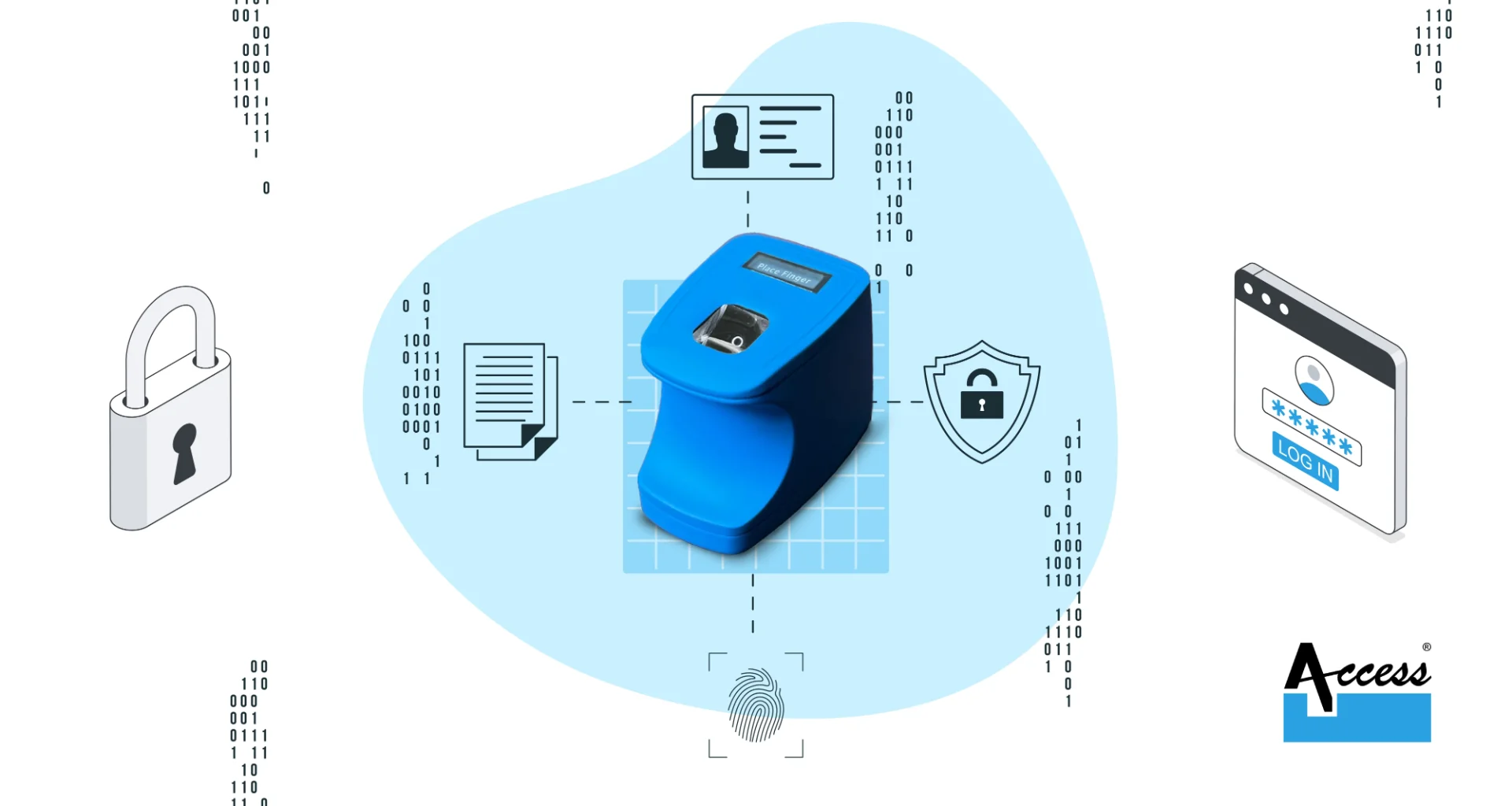
The recent development of a customised version of the FM220U L1 by our partners at Edgar Interactive, now referred to as the FM220U L1 B, offers a useful counter-example. It shows what happens when a device is allowed to evolve to meet specific use-case requirements, instead of expecting field teams to adapt to the hardware.
The requirement that led to the FM220U L1 B was straightforward: our partner needed a scanner that could function without cables and could integrate seamlessly into a mobile, frequently changing work environment. Operators were moving between temporary kiosks, outdoor verification points, and mobile service units where wired connectivity was not always practical.
Bluetooth connectivity solved the mobility constraint. A redesigned external shell solved the usability and aesthetic requirements. The rest of the device, i.e. sensor quality, L1 certification, reliability, remained intact.
The FM220U L1 B is not a “new model” in the traditional sense. It is an illustration of something more structural. The underlying hardware platform is flexible enough to support meaningful customisation.
This flexibility is not common across the industry. Most biometric devices are tightly packaged systems with limited room for modification, whether in firmware, connectivity, or physical design. Any attempt to alter them often risks voiding certifications or compromising performance.
In contrast, certain Access devices, including the FM220U L1, are designed with enough engineering headroom to allow controlled variations. This is why additional connectivity, exterior redesigns, or workflow-specific adjustments can be supported without creating an entirely new certification cycle.
As biometric deployments expand beyond controlled indoor environments, use-cases are becoming more diverse:
In such scenarios, small modifications, like eliminating cables, changing ergonomics, adding protective casing, or enabling faster device-app pairing, can significantly reduce operational friction.
For organisations working at scale, even a minor workflow improvement can translate into lower training requirements, shorter queue times, fewer errors, or reduced equipment downtime.
The development of the FM220U L1 B did not require a new R&D cycle or a completely new manufacturing line. It emerged from our partner identifying a very specific operational gap and a hardware platform that was open to adaptation.
This is a model of innovation that often goes unnoticed because it is quiet, incremental and pragmatic, but it is precisely the kind of innovation that helps projects succeed in the field.
Customisation here is more about aligning the device with the realities of deployment instead of forcing teams to adapt to limitations or just making cosmetic changes.
As digital identity initiatives continue to expand across India, the demand for tailored biometric hardware will increase. Projects will vary in connectivity constraints, environmental conditions, expected throughput, and integration methods. A single standard device cannot accommodate all of these variables efficiently.
The FM220U L1 B is one example of how hardware can be adapted responsibly and securely. More importantly, it demonstrates that a collaborative approach between manufacturers and partners can produce solutions that are better suited for the complexities of Indian deployments.
It is a small reminder that biometric devices do not need to be rigid, single-purpose instruments. When the underlying engineering supports it, customisation can become a practical and reliable part of a deployment strategy.