23 September 2026
What Is AEBAS And How Does It Work?
Understand how India's Aadhaar Based Biometric Attendance System works, where it is used, and what hardware government offices need.
23 September 2026
Understand how India's Aadhaar Based Biometric Attendance System works, where it is used, and what hardware government offices need.


Attendance management in government offices has increasingly moved from manual registers and card-based systems towards biometric authentication. In India's central government establishments, this transition is supported by the Aadhaar Enabled Biometric Attendance System (AEBAS).
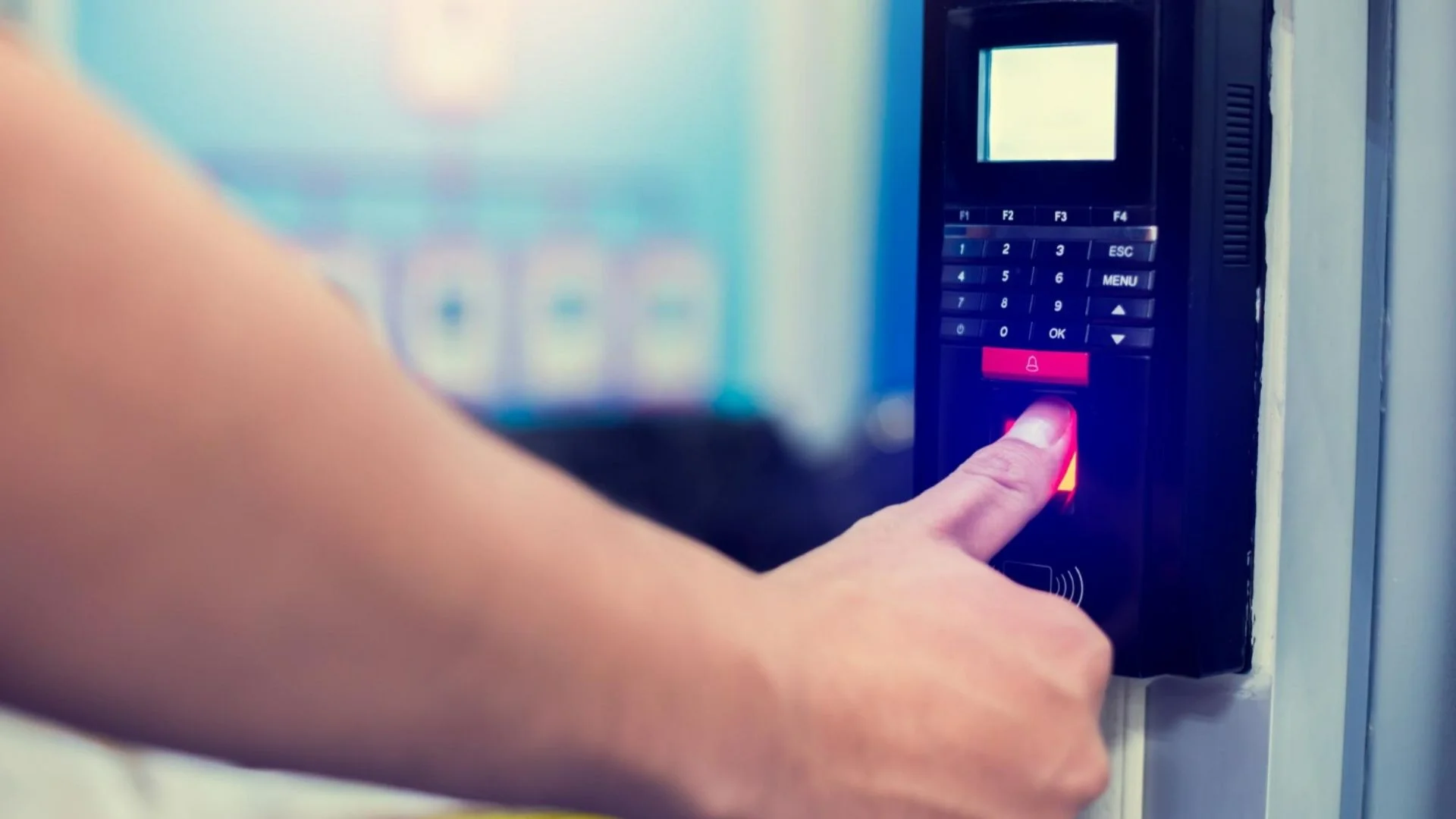
AEBAS uses Aadhaar-linked biometric authentication to record employee attendance and provide centralised visibility to administrators. Instead of relying on handwritten registers or physical attendance cards, employees authenticate their identity using a biometric device when they arrive at work.
For government IT administrators, procurement teams, and technology providers, understanding how AEBAS works is important when selecting, deploying, or maintaining the biometric hardware that supports the system.
The Aadhaar Enabled Biometric Attendance System (AEBAS) is a centralised biometric attendance system used for attendance monitoring in central government offices. It was introduced in 2014 under the Department of Personnel and Training (DoPT) and is managed through the National Informatics Centre (NIC).
The system uses Aadhaar-based biometric authentication to record employee attendance. When an employee authenticates using a registered biometric device, the attendance event is recorded against their identity along with relevant information such as the time and location of the authentication.
This provides government departments with a centralised system for monitoring attendance, managing exceptions, and accessing attendance records without relying on paper registers or manual reporting.
AEBAS is used across central government ministries, departments, and attached offices. This includes central government establishments operating across India's states and union territories.
It is important to distinguish AEBAS from biometric attendance systems used by state governments, public sector undertakings, and autonomous organisations. These organisations may use similar biometric technologies but operate under their own attendance frameworks.
For procurement and deployment purposes, the term AEBAS specifically refers to the central government attendance system implemented through the NIC framework.
The basic AEBAS workflow is straightforward for employees, while several systems operate behind the scenes to authenticate identity and record attendance.
A typical process works as follows:
If authentication fails because of a fingerprint capture problem, connectivity issue, or another exception, the event can be flagged for resolution rather than being silently recorded as successful attendance.
This approach gives administrators greater visibility into attendance exceptions and reduces dependence on manual reconciliation.
Biometric security is a fundamental part of Aadhaar-based authentication. AEBAS deployments therefore require biometric devices that meet the relevant UIDAI certification requirements, including L1 certification.
L1-certified biometric devices incorporate security measures that protect biometric information at the point of capture. The fingerprint is secured within the device before the authentication data is transmitted.
For a government attendance system operating across large numbers of employees and offices, securing biometric information at the hardware level is an important part of maintaining the integrity of the authentication process.
Government departments should therefore distinguish between devices that are genuinely certified for the required application and products that are marketed simply as "Aadhaar compatible" or "UIDAI enabled."
AEBAS biometric devices also operate within the UIDAI Registered Device (RD) framework. The relevant RD Service needs to remain active and compliant with current authentication requirements.
If the required RD Service is unavailable or no longer compliant, biometric authentication may fail and attendance events can be affected. Procurement teams should therefore consider not only the device itself, but also how the vendor manages RD Service updates and ongoing compliance.
The hardware used for AEBAS has to perform reliably under conditions that are different from a typical office technology deployment.

Government offices can experience a significant concentration of attendance activity during the morning. If hundreds of employees need to authenticate within a relatively short period, slow processing or repeated authentication failures can create queues and disrupt the start of the working day.
Device performance should therefore be evaluated under realistic usage conditions rather than only through individual transaction tests.
Employees vary considerably in age and occupation, and fingerprint quality can differ between individuals. Some employees may have worn or faint fingerprints that are more difficult for lower-quality sensors to capture.
Testing devices with employees who have previously experienced authentication problems can provide a more useful indication of real-world performance than relying solely on average accuracy figures.
A biometric device deployed in a government office is expected to operate consistently over an extended period. Build quality, sensor durability, dust resistance, power requirements, and availability of replacement hardware can all affect the long-term cost and reliability of a deployment.
AEBAS authentication depends on communication with external authentication infrastructure. Offices with unreliable or slow connectivity can therefore experience authentication failures.
AEBAS authentication depends on communication with external authentication infrastructure. Offices with unreliable or slow connectivity can therefore experience authentication failures.
Before deployment, IT teams should evaluate network conditions at each location and understand how the biometric system handles connectivity-related exceptions.
The FM220U L1 from Access Computech is a UIDAI L1-certified fingerprint device designed for biometric authentication applications, including government attendance deployments.
Before biometric attendance systems were introduced, government offices commonly relied on manual attendance registers or card-based systems. These processes required administrators to collect, maintain, and reconcile attendance records manually.
AEBAS provides a centralised alternative by creating digital attendance records linked to biometric authentication.
This can help departments:
The system also creates a more consistent record of attendance across participating establishments.
However, biometric attendance does not eliminate every operational challenge. Fingerprint authentication failures, Aadhaar-linking issues, connectivity problems, and device or RD Service issues can still create exceptions. Effective deployment therefore requires both compliant hardware and clear procedures for resolving these cases.
For government IT administrators and procurement teams evaluating AEBAS biometric devices, the product specification sheet is only one part of the decision.
Confirm that the device has the required UIDAI L1 certification and request supporting documentation. "Aadhaar compatible" should not be treated as equivalent to certification.
Check which RD Service the device uses, whether it is currently active, and how the vendor handles updates when authentication requirements change.
Test the device with employees who have different fingerprint conditions, particularly those who have experienced repeated authentication failures with existing hardware.
For departments operating across multiple states, cities, or district-level locations, evaluate the vendor's ability to provide technical support, replacement devices, and maintenance when required.
AEBAS hardware is part of an ongoing attendance infrastructure rather than a one-time technology purchase. Procurement teams should consider warranty terms, device lifecycle, software and RD Service support, and the availability of replacement hardware.
AEBAS has moved attendance management in participating central government establishments away from predominantly manual processes towards centralised biometric authentication. By linking attendance records to verified employee identities, the system provides administrators with greater visibility and reduces opportunities for manual manipulation.
The biometric device is an important part of that infrastructure. Its certification, authentication performance, durability, connectivity, and ongoing support can directly affect how reliably employees are able to record attendance.
For government departments evaluating AEBAS hardware, the right approach is therefore to look beyond the device specification alone. Certification, RD Service compliance, real-world performance, and long-term vendor support should all form part of the procurement decision.
Access Computech's FM220U L1 is a UIDAI L1-certified fingerprint device designed for biometric authentication deployments, including government attendance applications. If you'd like to understand how Access Computech's biometric solutions can support AEBAS and other government authentication requirements, kindly get in touch with our team.