18 March 2026
The Business Correspondent Agent's Biometric Toolkit
What makes a fingerprint device reliable enough for last-mile banking in India and what to look out for.
18 March 2026
What makes a fingerprint device reliable enough for last-mile banking in India and what to look out for.


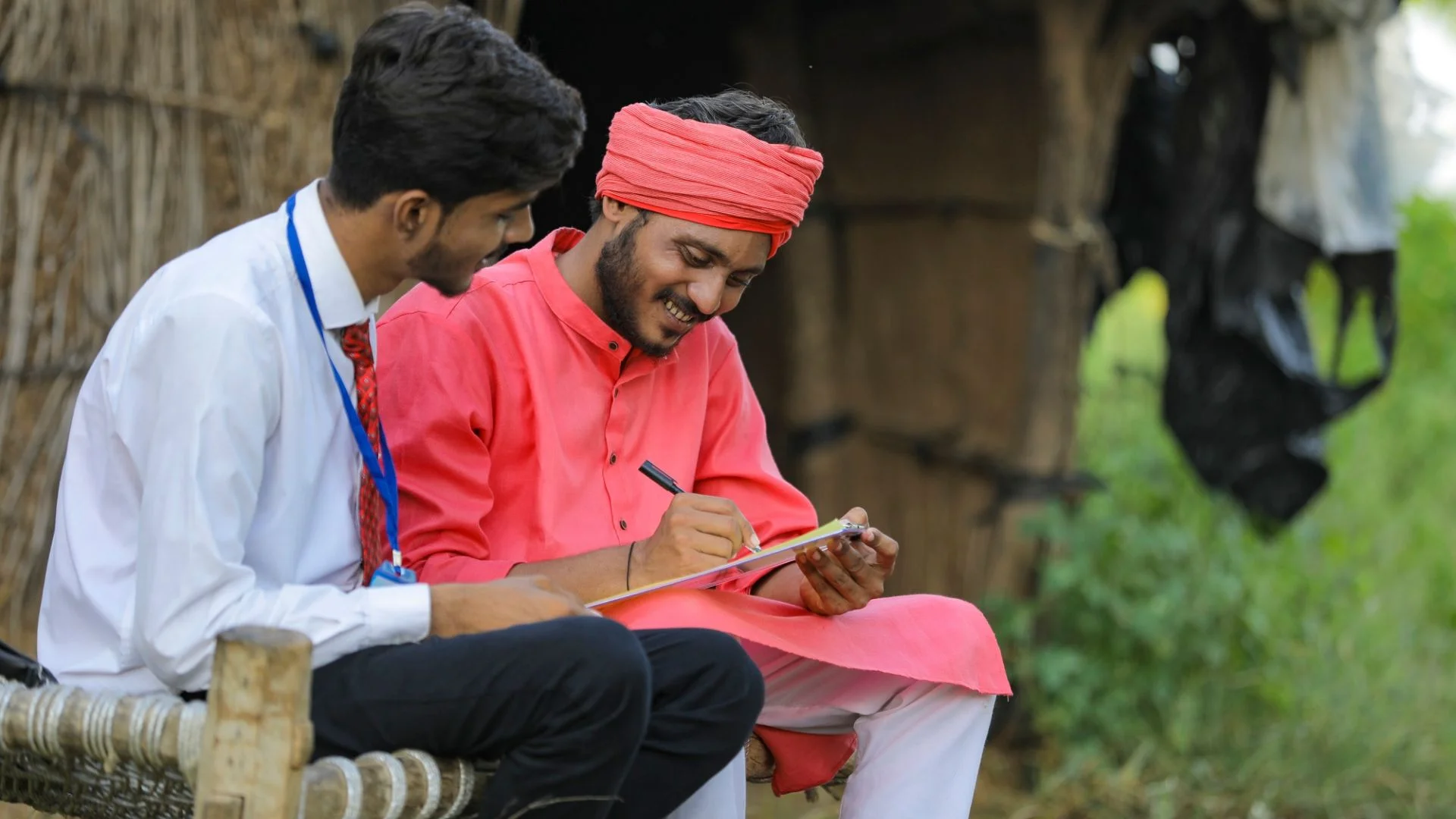
There are roughly 1.4 million Business Correspondent agents operating across India today. They are the human face of financial inclusion, sitting in kirana shops, panchayat offices, and small-town bank branches, processing Aadhaar-authenticated transactions for people who may have never walked into a formal bank.
Their entire operation rests on one thing working reliably: the biometric device in their hand.
No authentication, no transaction. And in the environments these agents work in (heat, dust, humidity, inconsistent power, zero IT support nearby), "reliable" means something very different from what it means in a controlled office setting.
A BC agent in rural Maharashtra isn't operating in an air-conditioned room with stable WiFi. They're often working outdoors, or in poorly ventilated spaces, serving people whose fingers may be calloused, dry, or worn from manual labour. The device needs to read those fingers accurately, every time, without needing a technician to troubleshoot it.
This is where most biometric deployments quietly struggle. A device that performs perfectly in a demo environment can start producing high rejection rates in the field, not because the algorithm is wrong, but because the sensor isn't built for those conditions. Dust accumulation on optical sensors, humidity affecting capacitive surfaces, and inconsistent finger placement all compound into a poor authentication experience.
When an authentication fails, it's the agent who bears the cost, a frustrated customer, a delayed transaction, and a dent in their credibility as a service provider.
The conversation around last-mile banking tends to focus on connectivity and rightly so. But even with good network coverage, a weak link at the capture layer will bottleneck the entire process.
This is why the device form factor matters as much as the sensor quality. BC agents are mobile by nature, they move between villages, visit customers at home, and set up temporary service points. A wired fingerprint device works well at a fixed counter, but a Bluetooth-enabled sensor gives an agent the freedom to authenticate a customer wherever they are, pairing seamlessly with a smartphone or micro-ATM without being tethered to a setup.
Devices like the FM220U L1 are built with exactly this context in mind. UIDAI L1-certified, with encrypted capture and RD service compatibility baked in, so the agent doesn't need to worry about compliance. It just works.
A lot of agents and the banks that deploy them don't fully appreciate what UIDAI L1 certification actually means in practice. It's not just a compliance requirement. L1 certification means the device handles biometric encryption on-board, has anti-spoofing protections built in, and communicates securely with the Aadhaar authentication ecosystem.
For a BC agent, this matters for two reasons. First, it protects their customers, every authentication is encrypted at the point of capture, not after. Second, it protects the agent, in a dispute or audit, a certified device leaves no ambiguity about whether the authentication was conducted correctly.
Deploying uncertified or outdated devices to save on upfront costs is a false economy. One failed audit or one compromised transaction costs far more.
If you're a bank, NBFC, or aggregator putting together a BC network, the hardware decision deserves more attention than it usually gets. A few things worth evaluating beyond the spec sheet:
The BC agent is doing critical work, often with minimal institutional support. The least the system can do is make sure the hardware doesn't let them down.
If you'd like to see how Access Computech's certified biometric portfolio maps to BC deployment requirements, we're happy to walk you through it.