25 June 2025
Secure Your Premises With Multispectral Biometrics
Multi-Spectral biometric technology isn't just the future, it's the present and Access Computech is ready to help you implement it.
25 June 2025
Multi-Spectral biometric technology isn't just the future, it's the present and Access Computech is ready to help you implement it.


It's a normal Monday morning and you're running a high-security facility with a traditional access control system which just failed to recognise your security head because he cut his finger or maybe an employee can't clock in because his hands are wet from rain. Well that's definitely a bad way to start the week.
This is where multi-spectral biometric technology comes in and today we're diving deep into how Access Computech is revolutionising security with technology that literally reads beneath the surface.
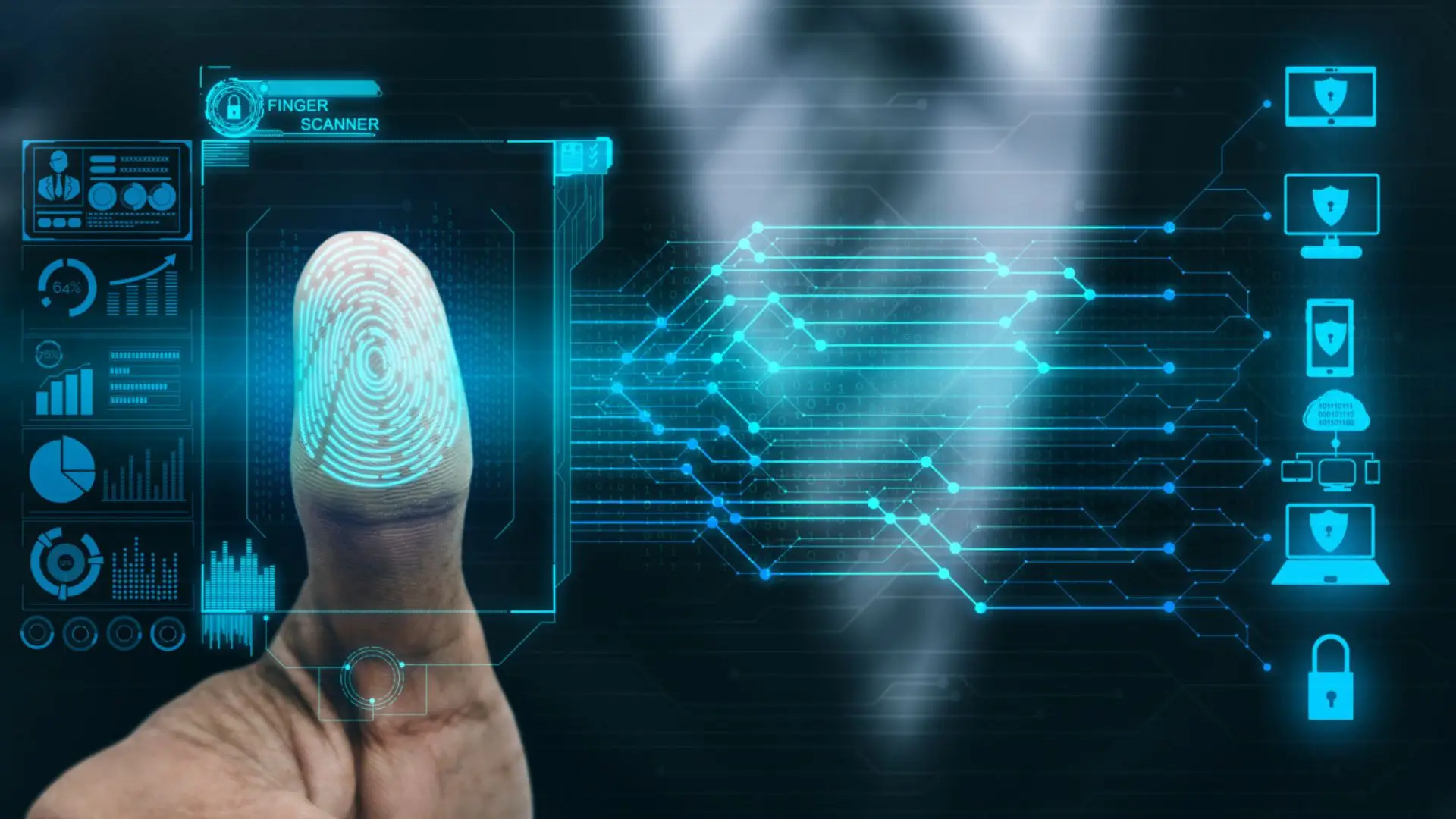
Let's start with the basics. Have you ever noticed how your smartphone’s fingerprint scanner sometimes fails when your finger is slightly wet or dirty? That is because it only reads the surface of your skin.
Multi-Spectral biometric technology is completely different. Instead of looking just at your fingertip’s surface, it uses multiple wavelengths of light to penetrate up to 4000 micrometers deep into your skin. That's about four times deeper than traditional optical scanners.
Another simple analogy will be this. Think of a traditional fingerprint scanner as taking a photo of a painting, multi-spectral scanning is like having an x-ray vision that sees through the paint to the canvas underneath.
This technology captures what we call subsurface fingerprint data, which means it can read your unique biometric signature even when your surface skin is compromised. Cuts, scars, dirt, moisture or even gloves don't matter anymore.
Traditional biometric systems fail in real-world conditions about 15-20% of the time. This might not sound like much, but in a facility with 1000 employees, that's 150-200 of your employees who can't get access to their workplace on any given day.
This problem gets worse in industrial environments. Workers with callused hands, employees who work with chemicals that can damage skin, or anyone in a wet environment, they all struggle with traditional scanners.
But, here's the kicker. The global biometric system market is projected to reach $84.5 billion by 2029, growing at a CAGR of 12.3%. Companies are clearly investing heavily in biometric security, but they require technology that actually works efficiently in the real world.
This is exactly the problem that we at Access Computech have been solving for over 25+ years. We've seen every challenge you can imagine and our Multi-Spectral solutions address them all.
Access Computech has been in the biometric and identity solution business for almost three decades. We're not any newcomers trying to make a quick buck, we're the established experts who've been refining this technology since before most people knew what biometrics was.
Our flagship product is the Sentinel FP and it's a beast. This device uses Mercury/Lumidigm multi-spectral technology with built-in spoof detection. It's IP55 rated, which means it can handle dust and water jets from any direction. The battery lasts 6 hours of continuous use and can store up to 50,000 fingerprint templates.
We didn't stop here. The Sentinel PROX MF Dual combines that same rugged biometric scanning with dual MIFARE card support. It has an LCD display, works offline and online both, includes a battery backup and can log 100,000 events. It's like having a complete premium access control in a single device.
For handheld applications, we present the AST 300 and FM220U L1, both of which are Aadhar-grade certified by the UIDAI.
The AST 300 is shockproof, dust and water-resistant and UIDAI STQC certified.
The FM220U L1 can scan and verify a fingerprint in less than one second with USB-C connectivity.
Let's talk about the benefits that this technology actually delivers.
Here's where Access Computech really shines. We don't just sell you a fingerprint scanner and wish you luck. We provide complete integration with broader security ecosystems.
For access control and surveillance, we offer seamless integration with Genetec systems. This means centralised management. We've worked with major industrial clients like Tata Steel, Reliance industries, ABB and BHEL for enterprise attendance, contract labour management, canteen access and visitor management.
Our systems provide real-time dashboards, proxy-free attendance tracking and automated reporting. No more buddy punching, no more time theft and no more manual labour reconciliation.
For payment and financial services, our A20 FP, F300 and F100 devices support biometric payments and AePS transactions with UIDAI L1 certification.
So how do you actually implement this technology? Us at Access Computech have developed a five step process.
Yes. These scanners capture subsurface details up to 4000 micrometers deep, making them highly effective and accurate even with damaged surface prints.
Access Computech devices use Lumidigm MSI sensors that actively distinguish live skin from artificial materials by analysing multiple light spectra. It's not just reading the pattern, it's verifying that it's attached to a person.
Absolutely. The Sentinel FP, Sentinel PROX MF Dual and AST 300 all offer offline mode with internal storage and battery backup. They can operate independently and sync data later when connectivity is restored.
Yes. We provide Genetac-certified integration, enabling seamless connection with your existing surveillance infrastructure and more.
If you're responsible for security at your organisation, you owe it to yourself and your organisation to see this technology in action. I'm not saying you need to rip out your existing systems tomorrow, but you should understand what's available and how it could improve your security.
We at Access Computech offer demos of our devices. We can show you exactly how this technology will work for your ecosystem, in and with your existing systems and for your specific use cases.
The security landscape is changing rapidly and the companies that thrive are the ones that stay ahead of the curve.
Multi-Spectral biometric technology isn't just the future, it's the present and Access Computech is ready to help you implement it.