01 July 2026
Latest POS Devices For Field Banking In India
A practical guide to modern POS and payment terminal options for BC agents, cooperative banks, and merchant networks operating at the last mile.

01 July 2026
A practical guide to modern POS and payment terminal options for BC agents, cooperative banks, and merchant networks operating at the last mile.


The point-of-sale device has quietly become one of the most important pieces of infrastructure in India's financial inclusion story. It sits at the intersection of identity, payments, and last-mile service delivery, and the institutions that get the hardware decision right, tend to build field operations that actually scale.
But POS devices in India have evolved significantly. What counts as a modern field banking terminal today is very different from what it was five years ago. For banks, cooperative institutions, business correspondents, and merchant aggregators evaluating their hardware options, here is a clear-eyed look at what the market currently offers and what actually matters for you in deployment.
A POS device deployed at a retail merchant is optimised for transaction speed and ease of use at a fixed counter. A field banking terminal has a different set of demands entirely.
It needs to authenticate identity in addition to processing the card. It needs to work reliably in low-connectivity environments. It needs to be carried by operators who are not technically trained and managed by institutions that cannot afford dedicated hardware support at every service point. It needs to handle multiple transaction types such as collections, disbursements, bill payments, and balance enquiries.
And increasingly, it needs to do all of this while meeting the certification requirements of UIDAI, NPCI, and RBI frameworks that govern how financial transactions are conducted in India's regulated ecosystem.
This is why field banking POS is its own category, and why a device that works well in a retail environment may not be the right choice for a BC agent or a cooperative bank's field collection team.

Android-based POS devices have become the dominant form factor for field banking in India over the last several years. They run on familiar operating systems, support third-party application development, and offer the flexibility to handle multiple use cases on a single device through purpose-built software layers.
For cooperative banks and BC network operators, the Android POS platform is attractive because it allows the institution's own workflows to be built on top of a certified hardware foundation rather than being locked into a proprietary software stack. The A20 from Access Computech operates on this model, an Android-based smart POS that supports merchant acquiring, soundbox integrations, and payment collection workflows, with L3-certified payment application support through SmartPay and PayNext.
The addition of a fingerprint sensor to a POS device transforms it from a payment terminal into a full Aadhaar-enabled banking instrument. A biometric POS can authenticate a customer via their Aadhaar number, process a withdrawal or deposit, collect a bill payment, and generate a receipt, all without requiring the customer to carry a card or remember a PIN.
This is the device class that powers the BC model at the last mile. For cooperative banks running pigmy collection operations, for MFIs processing loan repayments in rural geographies, and for payments banks enabling cash withdrawals through agent networks, the biometric POS or Micro ATM is the core operational tool.
The A20 FP is a UIDAI L1-certified biometric payment device built specifically for this environment. Fingerprint authentication, integrated payment processing, and a form factor designed for daily field use, with software compatibility for complete field banking workflows including collections, reconciliation, and digital receipts when paired with platforms like ezPigmy.
Not every field payment interaction requires a full POS terminal. For small merchants, kirana shops, and collection agents handling lower transaction volumes, a soundbox device, which confirms transactions via an audio alert and integrates with UPI payment flows, offers a simpler, lower-cost option.
Soundbox solutions work well as a complementary layer in a broader payment infrastructure, handling merchant-side UPI confirmations while a full biometric POS handles the Aadhaar-authenticated transactions that require identity verification.
Certification is not a procurement checkbox in field banking. It is the foundation on which the legality and integrity of every transaction rests.
UIDAI L1 certification is mandatory for any device handling Aadhaar-based biometric authentication. It means the device encrypts the fingerprint on-board, within a secure element, before the data leaves the sensor. For BC agents and cooperative bank field operators conducting Aadhaar-authenticated transactions, L1 certification is non-negotiable.
L3 certification covers the payment application layer, the software that handles card transactions, PIN entry, and communication with payment networks. A device processing card-based merchant payments needs an L3-certified payment application to operate within RBI and NPCI frameworks.
MOSIP certification is increasingly relevant for institutions operating within or alongside national digital identity programmes. Devices certified under the MOSIP framework are validated for use in sovereign identity deployments and cross-border identity infrastructure.
For institutions sourcing field banking hardware, confirming the specific certifications a device carries, and verifying that those certifications are current, is a more important evaluation step than most procurement processes give it.
The right device depends heavily on where and how it will be used.
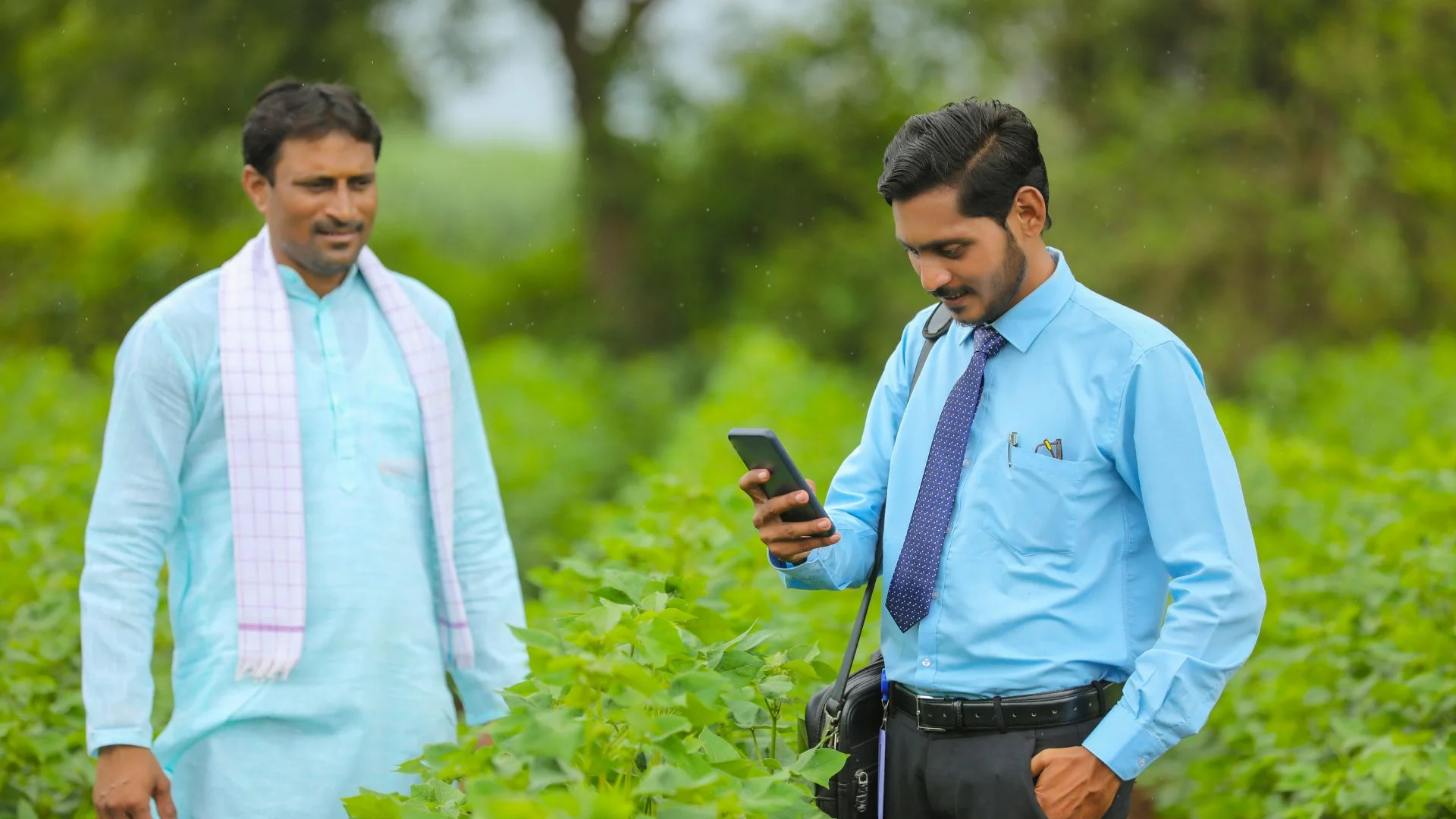
A BC agent covering a rural route needs a device that is light, battery-efficient, and operable from a smartphone, which makes Bluetooth-enabled biometric sensors paired with a mobile application a practical choice alongside or instead of a standalone terminal.
A cooperative bank's branch counter needs a stable, wired setup with consistent power and a larger screen for operator visibility, where a fixed Android POS terminal makes more sense.
A field collection executive visiting members at home needs something in between, a handheld biometric POS that is self-contained, portable, and capable of handling a full day's transactions without needing to return to a base.
Getting this assessment right before procurement, rather than deploying a single device type across all contexts, is one of the most straightforward ways to improve field authentication success rates and operator adoption.
Beyond certifications and form factors, a few practical questions are worth asking of any hardware vendor before committing to a field banking deployment:
In India's working population, this is not an edge case, it is a daily operational reality for BC agents and field collection teams.
A device that goes offline at a service point is a service disruption the institution is accountable for. The support infrastructure behind the hardware matters as much as the device itself.
The Registered Device service layer needs to stay current with UIDAI updates. A lapsed RD Service means failed authentications, and it is more common than most buyers anticipate when they source hardware from vendors who treat the RD Service as an afterthought.
The hardware and software layers need to be evaluated together, not independently. A strong platform built on hardware that cannot support its full feature set will underperform in the field regardless of how well either component works in isolation.
Field banking in India is at a point where the infrastructure conversation has moved from "can we do this digitally?" to "how do we do this reliably at scale?" The hardware decision is a significant part of that answer.
If you'd like to explore how Access Computech's POS and biometric payment portfolio maps to your field banking or merchant payment requirements, we're happy to help you find the right fit. Get in touch with our team.