14 January 2026
How Tripod Turnstiles Are The Most Practical Access Control
In settings where volume, discipline and durability matter, tripod turnstiles continue to outperform more complex access solutions
14 January 2026
In settings where volume, discipline and durability matter, tripod turnstiles continue to outperform more complex access solutions


In environments where movement and security must coexist, such as in corporate lobbies, factories, educational campuses, transport hubs and government facilities, access control is a mandatory requirement.
For decades, many organisations have relied on simple gates or personnel to manage movement. That approach works only up to a point: as volumes grow and expectations around safety, accuracy and auditability rise, more structured solutions become essential. This is where tripod turnstiles, such as the Tripode ZK Teco, find their place.
Unlike biometric readers or ID cards that simply authenticate, a tripod turnstile physically governs the flow of people. It creates a clear interface between who is allowed and who is not, with behaviour that doesn’t require constant supervision.
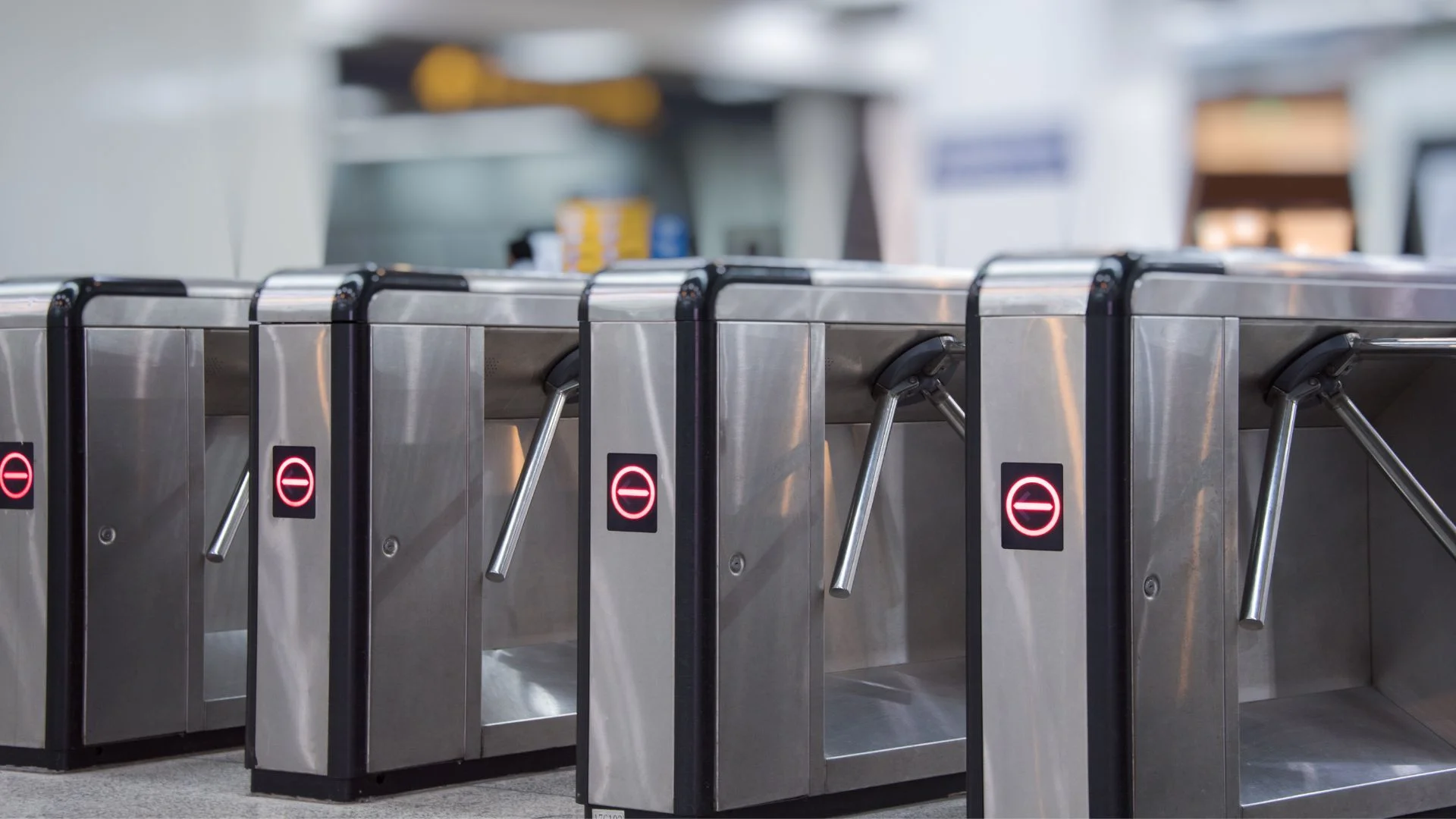
At its core, a tripod turnstile is a mechanical gate comprising three rotating arms. In its default state, the arms remain locked to prevent unauthorised movement. When an authorised signal arrives (such as from an access card, a biometric reader or any connected system), the arms release and allow a person to pass through.
This simplicity enforces one-person-at-a-time entry, discouraging tailgating and casual breaches that can occur with open gates or unattended entrances. Importantly, the mechanism is engineered to be reliable and easy to integrate with existing access control systems.
Industrial and institutional environments can be tough on hardware. Turnstiles are often positioned in high-traffic zones where dust, temperature changes, and frequent use are the norm.
Ruggedness matters here because in many facilities a turnstile will see thousands of passages a day under varying conditions. A device that fails or requires constant adjustment quickly becomes a source of operational friction rather than a support. For example, the Tripode ZK Teco’s stainless steel construction ensures structural durability that stands up to heavy use without becoming a maintenance burden.
Turnstiles are most useful when they work as part of a broader identity and can communicate with the entire access ecosystem. Whether the authentication signal comes from an RFID card reader, a fingerprint sensor, or a biometric access system, a tripod turnstile acts on that signal to manage physical access.
This means you can design workflows where:
In all these cases, the turnstile does more than control a doorway. It becomes the physical expression of a rule that has already been evaluated by software upstream.
In well-designed turnstile systems, safety features are not an afterthought. For example, tripod arms are often designed to drop automatically during power loss or emergency conditions, allowing unimpeded outflow or exits. Which is a simple yet essential feature in crowded environments or where rapid evacuation may be needed.
The consistent one-person flow also addresses concerns that can arise in open access environments: by regulating movement mechanically, turnstiles make certain that when a door is opened following authentication, only the intended individual passes through.
Tripod turnstiles like the Tripode ZK Teco are versatile precisely because their role is narrow but essential: regulate passage with integrity, durability and predictability. They are well suited to:
Unlike more elaborate gates or full-height systems that are designed for very high security perimeters, tripod turnstiles strike a balance between control and accessibility, sufficient for most operational needs while keeping installation, footprint and cost manageable.
As organisations invest in broader identity and access frameworks, the physical control of spaces becomes a practical extension of those digital systems. A well-configured turnstile is not a standalone device; it is part of a seamless experience where authentication upstream translates directly into go / no-go at the doorway.
In that respect, thinking about access control no longer begins or ends with the payment, badge or scan. It includes the moment of passage itself and whether it reinforces security, compliance and clarity of process.
Tripod turnstiles such as the Tripode ZK Teco are designed for exactly that intersection: durable hardware that respects the decision made by your identity systems, and sensible engineering that keeps human behaviour predictable without becoming intrusive.