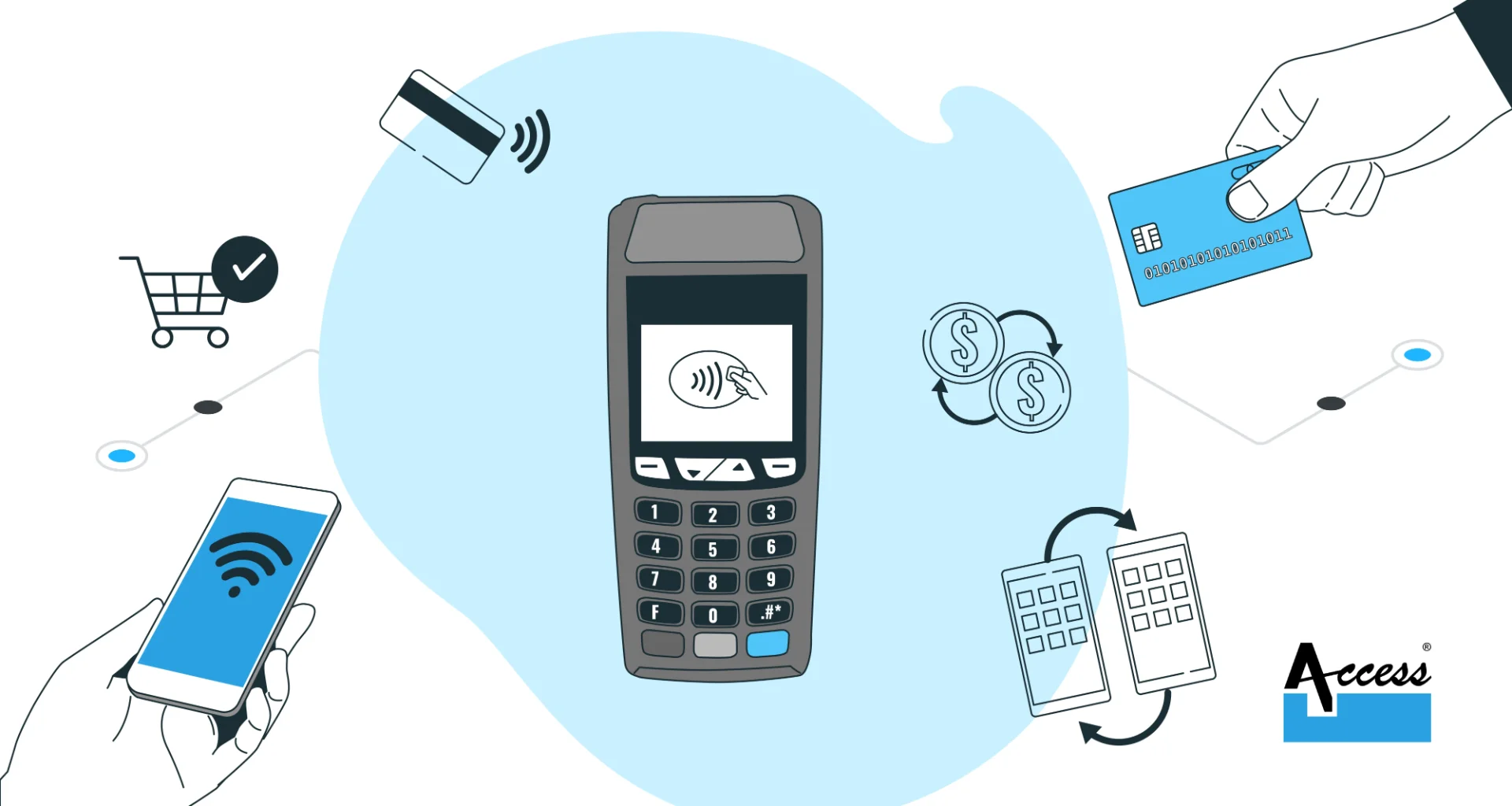
India’s payment and retail infrastructure is evolving fast. As digital payments, UPI, and
hybrid payment modes expand, the demand for robust, locally-deployable POS and biometric
devices has surged, creating an opportunity for manufacturers and vendors who understand
Indian needs.
For procurement teams, system integrators, and retail / service-sector buyers, this shift
means: design for scale, focus on compliance, and pick vendors who build for real Indian
conditions. That’s where Access Computech aims to stand out.
POS Devices are on a steady upward trajectory
To understand where India’s POS ecosystem is heading, it helps to step back and look at the
market forces shaping it. Over the past five years, India has transformed from a cash-heavy
retail environment to a hybrid payments economy, and device deployments have followed the
money.
India’s POS device market, which includes fixed countertop terminals, mobile POS,
Android-based smart POS, and cloud-integrated systems, stood at US $536.44 million in 2024.
The growth outlook is even more striking: the market is projected to reach US $1,362.54
million by 2033, expanding at a CAGR of 10.37% (2025–2033).
(Data Source: IMARC Group)
A set of concrete behavioural and infrastructural shifts are driving this
growth:
1. The UPI effect
UPI’s rise hasn’t eliminated the need for POS devices. Ironically, it has strengthened it.
Today’s consumer expects multiple payment rails at every checkout: cards, UPI, tap-to-pay,
QR, wallets.
Worldline’s
payments report highlights that QR + UPI now complements card-based transactions
rather than replacing them, pushing demand for versatile terminals rather than single-mode
devices.
2. SMEs are digitising faster than ever before
The fastest growth is no longer coming from malls or chain stores, it’s coming from small
businesses.
From neighborhood kiranas to independent pharmacies to Tier-3 retail clusters, SMEs are
adopting POS terminals to track sales, reduce cash-handling risk, and accept hybrid
payments.
As per IMARC’s analysis (as shared earlier in this article), SMEs and service-sector
businesses account for a rising share of POS terminal deployments, a trend expected to
intensify as GST compliance, inventory integration, and digital billing become standard
practice.
3. Expansion beyond metro India
Earlier, POS deployments were largely localised in urban centers. That
concentration is disappearing.
Retail growth in Tier-2 and Tier-3 cities, coupled with aggressive network
expansion by banks and fintechs, has significantly broadened the geographic footprint of POS
installations.
As a result, demand has shifted towards:
- rugged terminals suited for semi-urban and rural conditions
- portable Android POS devices for delivery-based businesses
- battery-efficient mobile POS for fuel stations, logistics, and transport
4. The rise of smart POS as a business platform
Smart POS devices have evolved far beyond the “card swipe machine” stereotype.
They now function as:
- mini billing systems
- order-management terminals
- ERP-integrated retail tools
- customer-analytics collection points
This shift towards “POS as a business interface” explains why the share of Android smart POS
devices has been growing faster than traditional fixed POS.
5. Institutional & government digital initiatives
Banking inclusion, Aadhaar-linked authentication, subsidy distribution, and digitisation of
public services have also contributed indirectly to POS growth, particularly in sectors that
require identity verification + transaction recording on the same device.
What this means for buyers & procurement teams
- Scalability & Future Proofing - As payment
habits shift (cards, UPI,
wallets, contactless), terminals must handle multi-payment modes.
- Durability & Reliability - Many deployments will
be in Indian rural or
semi-urban environments with variable conditions.
- Compliance & Security - Hardware must meet
security standards.
- Integration Capability - Devices should
integrate with ERP, inventory,
billing or biometric systems.
- Local Support & After-Sales Service - Critical
for multi-location
deployments.
What buyers should ask before investing
| Question |
Why It Matters |
| Is the terminal hybrid (supports card, UPI QR, wallet, NFC, contactless)?
|
Ensures flexibility across payment preferences. |
| Is the device rugged, suited for Indian store environments? |
Reduces hardware failure, maintenance cost, downtime. |
| Can the device integrate with ERP, billing, inventory or biometric systems?
|
Enables future expansion. |
| Is there a reliable local support & service network? |
Critical for multi-location deployments. |
| Does the vendor provide security compliance? |
Essential for trust and data protection. |
| Are the total cost of ownership and upgrade path clear? |
Avoids lock-in and ensures longevity. |
How Access Computech helps
As a manufacturer and solutions provider operating in India, Access Computech is
uniquely positioned to meet these needs. Here’s how:
- Devices Built for Indian Conditions: Our
hardware, from fixed POS terminals
to portable, integrated biometric & POS devices, is designed keeping Indian climate,
connectivity, and usage patterns in mind.
- Hybrid Payment & Biometric Readiness: With core
expertise in biometric
systems (attendance, access control), we’re well suited to deliver POS devices that can
double up for Aadhaar-backed identification, government subsidy distribution, ration
shops, or welfare-scheme rollouts.
- Scalable Supply Chain & Deployment Support:
Given the growing demand across
SMEs, retail chains, and institutional clients, we emphasise supply-chain robustness and
after-sales service, reducing downtime and ensuring consistent performance.
- Commitment to Security & Compliance:
Understanding that many government or
institutional deployments require secure biometric or payment terminals, we focus on
building devices that meet stringent standards.
- Future-Ready Approach: As Indian POS market
moves towards smart POS,
cloud-based analytics, mobile integration and hybrid payment acceptance (card + UPI +
wallet + QR + contactless), our roadmap aligns with these trends, helping buyers invest
not just for today, but for 5–10 years ahead.
The data is clear: India’s POS device market is growing rapidly, driven by digital payments,
hybrid payment acceptance, SME adoption, and retail expansion. For procurement teams, system
integrators, and institutional buyers, now is a strategic moment to invest in POS and
biometric-capable devices, but only if they choose carefully.
Access Computech offers devices and solutions built with Indian realities in mind.
For anyone planning POS rollouts, multi-location deployments, or integration with billing /
subsidy / access / attendance systems, the right time to start is now. And the right
hardware partner could make all the difference.